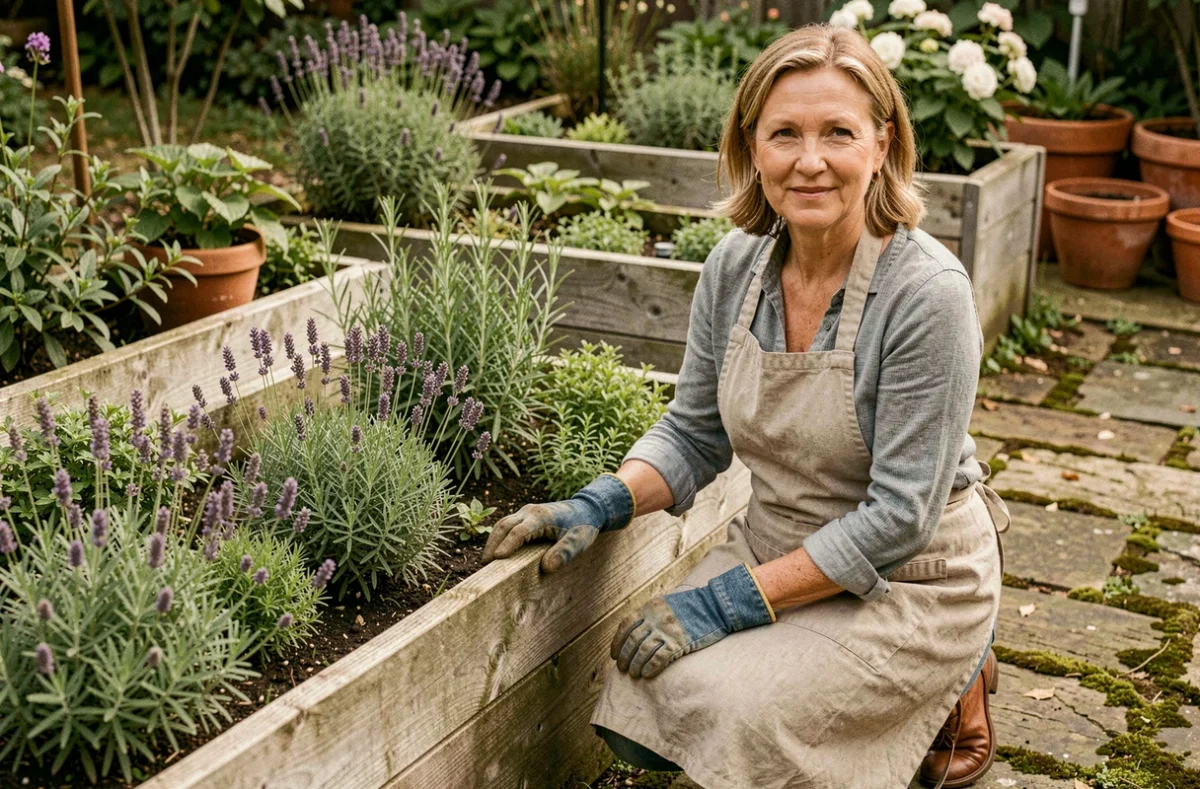
Maintaining an attractive garden year-round involves dealing with constraints that go beyond just choosing plants. Watering restrictions, soils depleted by dry summers, and declining biodiversity in ornamental plots: the parameters to consider have multiplied in recent years. Creating a thriving garden throughout the year now requires an approach that integrates plant calendar, water management, and soil adaptation.
Watering Restrictions in France: What Drought Orders Change for the Garden
The drought orders implemented since the summer of 2026 in many French departments no longer treat the garden as a uniform whole. The regulations now distinguish between vegetable gardens, decorative lawns, flower beds, and young trees, with specific time slots for each category.
The four national levels (vigilance, alert, heightened alert, crisis) structure these local decisions. Most orders only allow watering during the cool hours, early in the morning or late in the evening. At the crisis level, watering of purely ornamental lawns and flower beds may be completely prohibited.
The financial aspect deserves attention: non-compliance with these restrictions can lead to a 5th class fine of up to 1,500 euros, and up to 3,000 euros in case of repeat offenses, according to reminders from Service-Public. Food-producing areas (vegetable gardens, fruit trees) benefit from more lenient treatment in the majority of recent orders, even at the heightened alert level.
A gardener planning their plantings should therefore consider reserving part of their space for edible crops, if only to maintain a broader right to water when restrictions tighten.
To keep track of the evolution of restrictions at the municipal level, the interactive map on the VigiEau website allows users to check the applicable level for their address. Additional resources on garden maintenance and design are available at https://www.lemondedujardin.com/, which covers both planting techniques and the selection of suitable materials.
Drought-Resistant Plants: Creating a Flowering Garden Without Excessive Watering
Xeriscaping, once limited to Mediterranean regions, is gaining ground in areas where dry summers are becoming the norm. The principle relies on selecting plants capable of surviving several weeks without water once established.
Among the plants frequently cited for their resilience are sedums, shrub salvias, and Buenos Aires verbena, which combine prolonged flowering with low water needs. These species allow for maintaining colors in flower beds from June to October without using the hose.
Selection Criteria for a Water-Efficient Flower Bed
- The root system: deep-rooted plants (lavenders, gaura) capture residual soil moisture much better than shallow-rooted annuals
- The foliage: silver, fuzzy, or leathery leaves (stachys, rosemary, cistus) limit evapotranspiration during high heat
- The origin: favoring plants from local nurseries that have already experienced water stress increases their survival rate in the ground
- The association: alternating perennials with staggered flowering (spring, summer, fall) ensures continuous visual interest without multiplying water-hungry species
Organic mulching (wood chip, straw, buckwheat husks) complements this approach by reducing soil evaporation. A sufficiently dense layer maintains root coolness and limits the emergence of weeds, thereby reducing competition for available water.
Living Soil and Biodiversity: The Foundations of a Thriving Year-Round Garden
A study conducted in Paris, reported by the European Commission and INRAE, showed that urban vegetable gardens host more wild biodiversity than strictly ornamental green spaces. This finding also applies to private gardens: soil enriched with regular organic inputs (compost, decomposed manure) attracts beneficial fauna (earthworms, carabids, pollinators) that contribute to the overall health of the plants.
The link between living soil and resilience to climate extremes is direct. Soil rich in organic matter retains rainwater better, releases nutrients gradually, and limits erosion during storm events. Conversely, compacted or chemically depleted soil requires more frequent watering and fertilization to compensate.
Soil Maintenance by Season
In autumn, surface application of compost (without deep burying) nourishes the microfauna that will work the soil during winter. In spring, light raking is sufficient to aerate the top few centimeters without disturbing the mycorrhizal networks.
A garden based on biologically active soil requires fewer corrective interventions over the years. Plants root better, resist fungal diseases more effectively, and endure stressful periods with more resources.
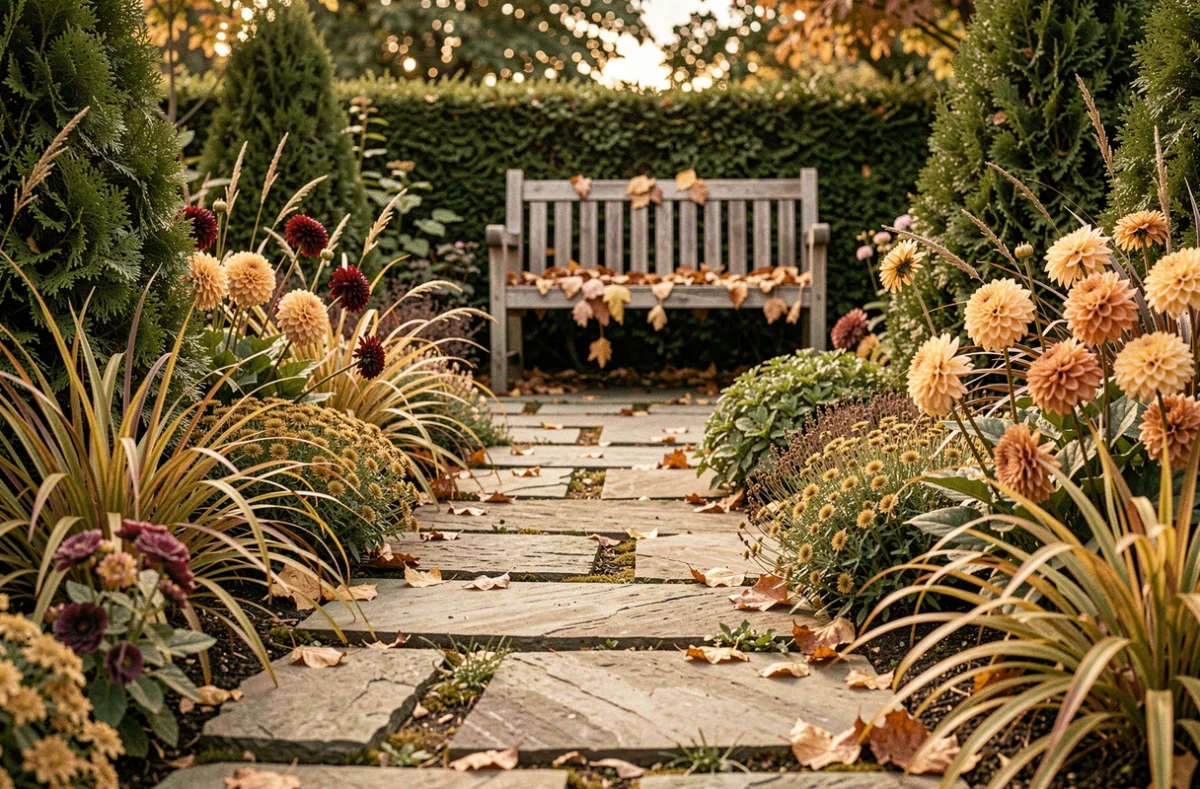
Planting Calendar: Staggering Flowering Over Twelve Months
A common mistake is to concentrate plant purchases in spring, resulting in a visual peak in May-June followed by a dull garden by the end of summer. To achieve a flowering garden year-round, one must think in temporal layers.
- Winter (December-February): hellebores, winter jasmine, witch hazel. These species bloom when the rest of the garden is dormant, provided they are placed in a sheltered position
- Spring (March-May): early bulbs (crocuses, daffodils), followed by spring-flowering perennials (perennial geraniums, euphorbias)
- Summer (June-August): salvias, agapanthus, and echinaceas take over if the soil remains cool in depth thanks to mulching
- Autumn (September-November): asters, Japanese anemones, ornamental grasses whose dry inflorescences remain decorative until the first frosts
Three to four species per season are sufficient to maintain permanent visual interest without turning maintenance into a chore. Adding a few evergreens (boxwood, osmanthus, nandina) structures the garden during the quiet months and serves as a backdrop for successive blooms.
The choice of colors depends on the desired style, but a consistent color theme (for example, warm tones in summer and whites in winter) avoids a catalog effect and gives coherence to the outdoor space, even on a small terrace or a limited flower bed.
A garden designed around these four axes (water regulation, suitable plants, living soil, and staggered flowering) reduces both maintenance time and dependence on inputs. Field reports vary on the time required for such a garden to reach its full potential, but most perennials and shrubs installed reach their adult size in two to three growing seasons.