Which beauty trends withstand the test of time, and which are just marketing hype? Between regulatory reformulations that change product compositions, new minimalist approaches to skincare, and the return of forgotten textures in makeup, the answer depends less on social media than on what is actually happening in the formulas.
This article compares current beauty movements in terms of their sustainability and their concrete impact on skin, hair, and daily routines.
Cosmetic Regulation in Europe: What’s Changing in Your Products
Beauty trends do not only emerge on runways or video platforms. European regulation is quietly reshaping the contents of bottles. France has adopted a broad ban on PFAS (per- and polyfluoroalkyl substances) in cosmetics, targeting the manufacture, import, and marketing of products containing these compounds, subject to defined trace thresholds.
At the same time, the European Union has set specific limits for PFHxA and related substances. Compliance with the European rule does not guarantee compliance with the French ban, as the two frameworks are distinct in their scope. Several brands have had to reformulate foundations, makeup setting sprays, and long-wear creams that used PFAS for their waterproof or smoothing effects.
Another aspect to watch: restrictions on microplastics in cosmetics are gradual, not immediate for all categories. Deadlines vary depending on whether the products are rinsed, leave-on, or makeup for lips or nails. A product labeled “microplastic-free” may therefore comply with the first wave of restrictions without being completely free of synthetic polymers. Checking the INCI list remains the most reliable reflex.
Regulation (EU) 2025/877 has also removed an authorization concerning TPO in artificial nail systems, classified among CMR substances. For fans of gel or resin applications, this means that some nail products available a few months ago are no longer compliant. Resources available on the Fashionova beauty site allow you to track these product developments season after season.
Makeup and Skincare Trends: Comparative Table of Current Movements
Not all beauty trends have the same level of maturity or impact on a routine. The table below compares the main movements according to three criteria: their age, their actual effect on the skin, and their product accessibility.
| Trend | Age | Observed Effect on Skin | Product Accessibility |
|---|---|---|---|
| Skinimalism (reduced routine) | Several seasons | Reduction of irritation related to excessive layering | Very accessible, fewer products needed |
| Korean bodycare (multi-layer body care) | Emerging in Europe | Prolonged body hydration, gradual results | Limited ranges outside specialized circuits |
| “Naked skin” makeup (skin tint, liquid blush) | Established for several seasons | Less occlusion, suitable for sensitive skin | Wide choice in pharmacies and online |
| Textured eyeshadow (creams, mousse) | Cyclical return | Better coverage on mature eyelids, variable hold | Available in most brands |
| Peptide-based hair care | Recent | Limited data on hair regrowth | Premium products, high prices |
Skinimalism and “naked skin” makeup share a common logic: reducing the number of layers applied. Their longevity in trends is explained by a measurable benefit, the decrease in skin reactions related to the stacking of incompatible formulas.
Skinimalism vs. Layering: Why the Minimalist Routine is Gaining Ground
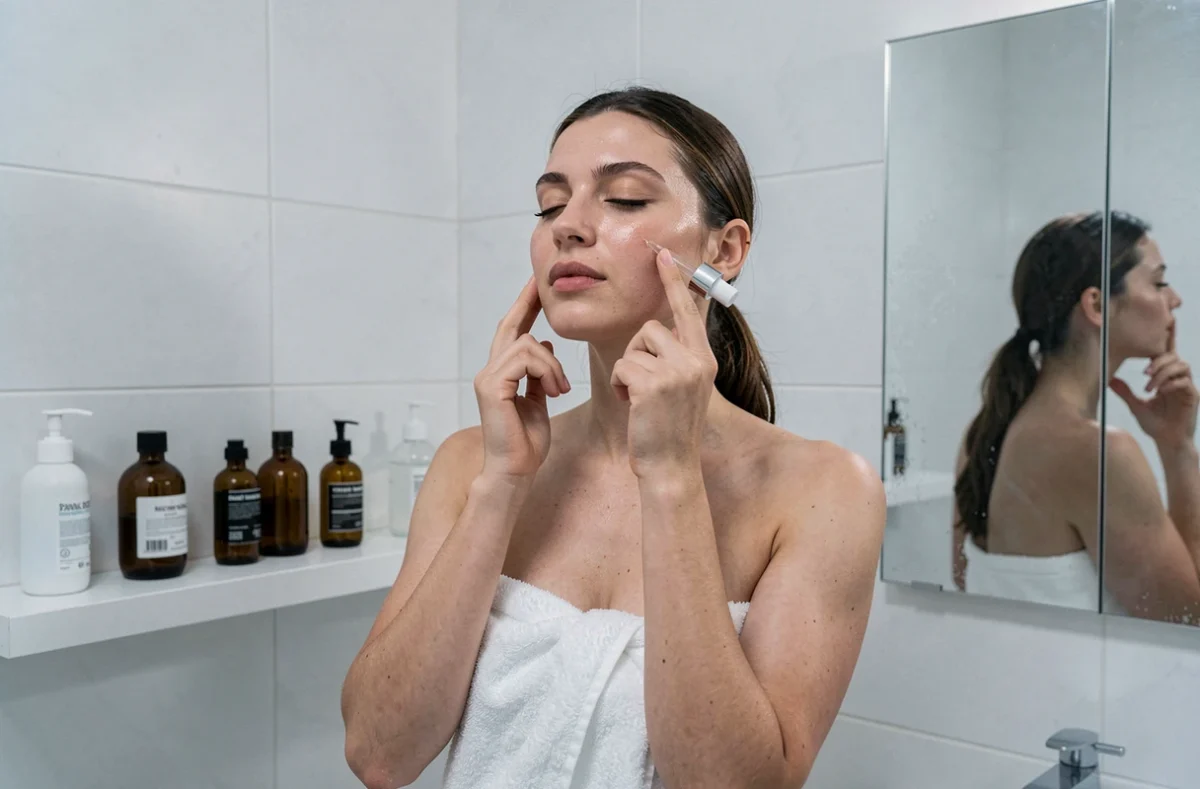
Layering (the stacking of serums, essences, creams, oils) has dominated beauty routines for several years. The trend is reversing. Simplifying your routine to three or four well-chosen products often yields better results than an eight-step sequence, especially for reactive or acne-prone skin.
The explanation lies in the chemistry of formulations. Each product contains emulsifiers, preservatives, and actives that interact with each other. Increasing the layers raises the risk of incompatibility (for example, high-concentration niacinamide and pure vitamin C applied simultaneously can cause redness in some people).
- A typical skinimalist routine for the face: gentle cleanser, targeted serum based on the main concern, moisturizing cream with SPF in the morning
- For hair, the same principle applies: a shampoo suitable for the scalp, a conditioner for the lengths, a leave-in treatment if necessary
- Korean bodycare proposes the opposite for the body (exfoliant, essence, lotion, balm), but its adoption in Europe is hindered by the time the routine requires daily
Skinimalism works because it forces you to identify your main concern (dehydration, spots, texture) rather than trying to address all issues at once with actives that neutralize each other.
Reformulated Beauty Products: How to Check Composition Before Buying
Reformulations related to European restrictions are not always visibly indicated on the packaging. A product can change its formula without altering its commercial name or packaging.
The first reflex is to compare the INCI list between two purchases. Mobile apps for cosmetic scanning facilitate this step, but they are not always up to date on new restrictions (notably regarding PFAS and PFHxA). Checking the manufacturing date of the batch remains more reliable than an algorithmic rating that does not account for the latest regulations.
For nail products, the removal of TPO authorization means checking with your nail technician that the gels and resins used comply with regulation 2025/877. Old stocks may still circulate during a transitional period.
Makeup and Look: Textures That Truly Change the Result
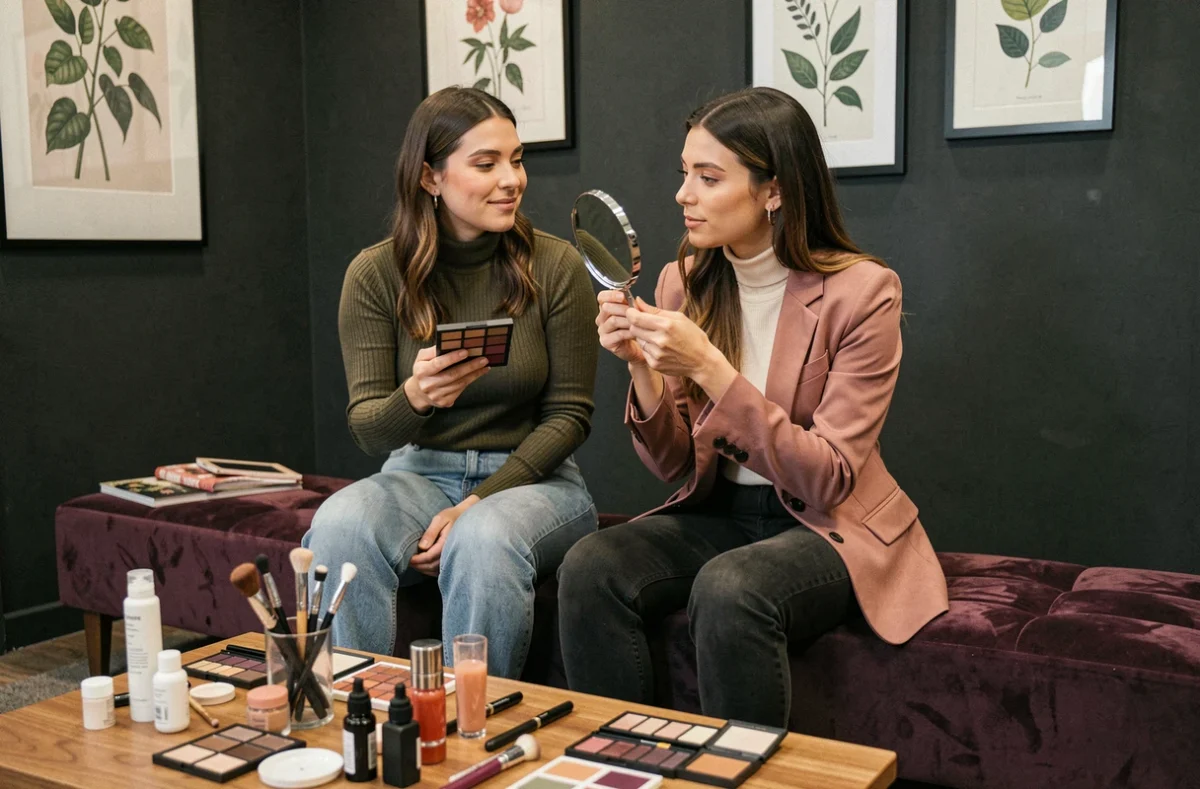
On the makeup side, the return of cream and mousse textures (eyeshadows, blushes, highlighters) alters the final result more than just a color change. Cream textures melt into the skin instead of sitting on top, creating that “enhanced naked skin” effect that compact powders do not replicate.
Liquid blush applied to cheeks and lips simultaneously creates a color coherence that powder formulas make harder to achieve. For mature skin, cream textures avoid the “cracked” effect that powders accentuate by settling into fine lines.
These texture choices matter more than seasonal color. A pale pink cream blush worn for three years remains more modern than a powder blush in the trendy shade of the moment, simply because the finish on the skin appears more natural and blended.
The most sustainable beauty trends are those based on a change in formulation or regulation, not on a change in palette. Monitoring what goes in and out of compositions gives you an edge over any social media platform.