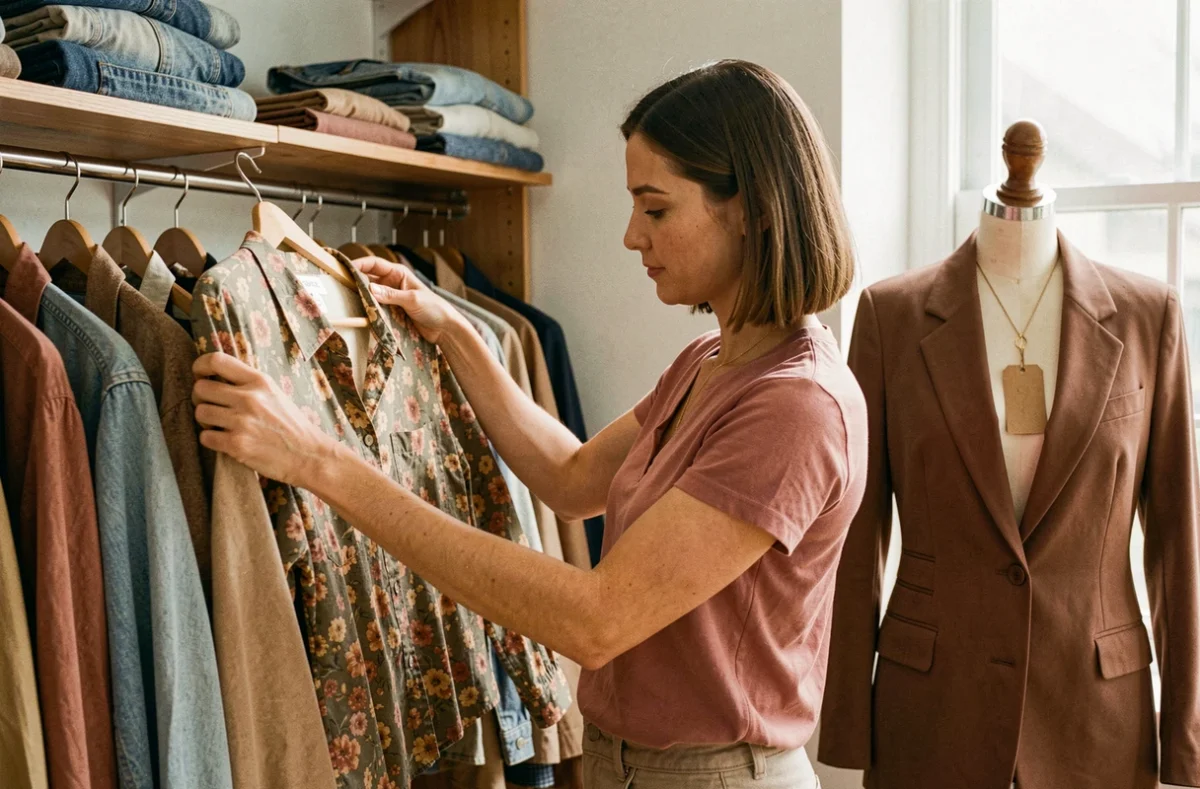
Selling vintage clothing online starts with managing a stock of one-of-a-kind pieces. Each item exists in just one copy, in one size, and with its own level of wear. This constraint changes everything: logistics, photography, pricing and product turnover all work differently than in a conventional e-commerce business. Understanding these specifics before publishing your first listing can save you months of trial and error.
Unsold vintage clothing: the hidden cost guides don’t put a number on
Have you noticed that tutorials cover sourcing and listing products, but stop when an item fails to find a buyer? In a vintage clothing store, unsold items are a cost you need to plan for from the outset.
Items bought by the kilo in bulk don’t always resell. Some sizes, styles or conditions fail to find a buyer, even after several price cuts. Stock sitting idle ties up cash and takes up storage space for nothing.
There are three practical ways to limit your losses:
- Resell the remaining items in bulk to another reseller or wholesaler at a reduced price, freeing up stock quickly.
- Run flash sales or offer themed bundles (90s bundle, denim bundle) to sell several items at once at an attractive price.
- Send unsellable items to a textile reuse channel, avoiding dead stock while supporting France’s textile EPR scheme.
The second-hand market is part of a reuse sector under pressure. For an online store, this makes it worthwhile to monitor the quality of your sourcing and plan an exit route for every item, including those that may never sell. This in-depth article on vintage clothing on Buzzorama explores overall profitability, including unsold stock.
Real margins on vintage clothing: from price per kilo to net profit
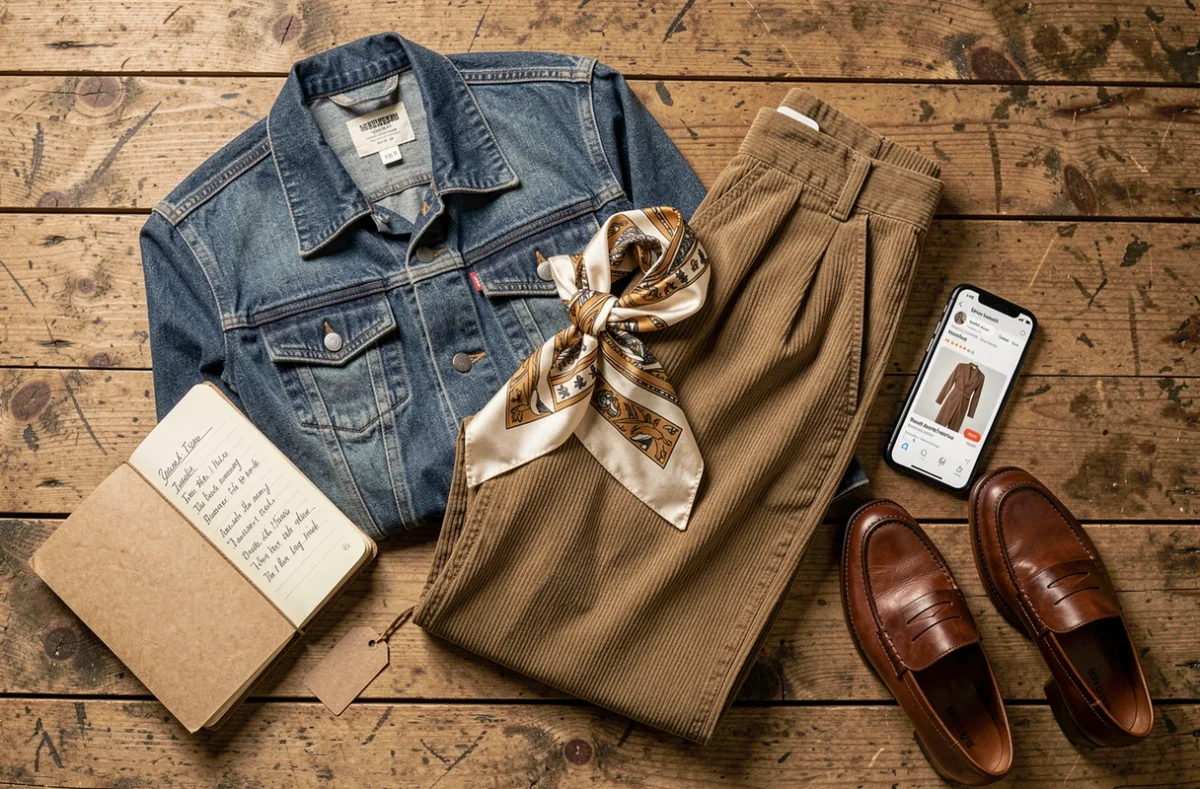
A sorted bale from a wholesaler costs between 8 and 15 euros per kilo, according to internal data from French wholesalers. That price per kilo may seem low, but it says nothing about your actual profit.
Several costs come between buying and selling: sorting time, washing or possible repairs, the photo shoot, writing the product listing, packaging and shipping. Each item sold takes between 15 and 30 minutes of work before it is even shipped.
For a well-sorted bale resold through Vinted, the average net margin is around 60 to 70%, according to data from specialist wholesalers. This range assumes that most items in the lot find a buyer. As the unsold rate rises, the actual margin falls.
Resale prices by item type
A 90s denim piece in good condition typically resells for between 18 and 35 euros on Vinted. Sought-after brands (Levi’s, Carhartt, Ralph Lauren) are at the top of this range. Unbranded basics struggle to sell for more than 10 euros.
Setting prices that account for the time spent on each item changes how you view profitability. An item sold for 12 euros after 25 minutes of preparation doesn’t generate the same hourly income as one sold for 30 euros after 15 minutes of work.
Selling on Vinted, Depop or your own store: choose a channel that fits your volume
Growth in the second-hand market doesn’t benefit every sales channel equally. Marketplaces like Vinted attract a broad audience, but average prices remain low. Your own online store (Shopify, WooCommerce) lets you price items higher, provided you have a clear visual identity and positioning.
Relying on a single platform leaves you exposed to changes in its fees and algorithm. Testing your presence on two or three different channels can help you reach distinct buyer profiles.
Legal requirements based on the seller’s status
Once sales become regular, they fall under the rules for professional activity. For a micro-enterprise, the annual turnover threshold for selling goods is set at 188 700 euros. From the first euro received on a regular basis, DAC7 reporting applies.
Professional distance sellers must also comply with the right of withdrawal that applies to online purchases. The requirements differ from those for a sale between private individuals: return policies, legal notices and invoicing are subject to specific rules that vary according to the seller’s status.
Vintage product listings: describe a one-of-a-kind piece without misleading buyers or overstating its quality
Every vintage garment is one of a kind. The product listing takes the place of trying it on in a fitting room. It needs to provide enough information for buyers to make a decision without being able to touch the fabric.
Three elements distinguish a listing that sells from one that puts buyers off:
- Actual measurements (chest, waist, length), taken flat in centimetres—not the size on the label, which varies by era and brand.
- The item’s exact condition: stains, snags, fading or missing buttons. Mentioning flaws reduces returns and builds customer trust.
- Details about the item: decade, material and brand, if identifiable. These details help with marketplace search rankings and attract buyers looking for a specific style.
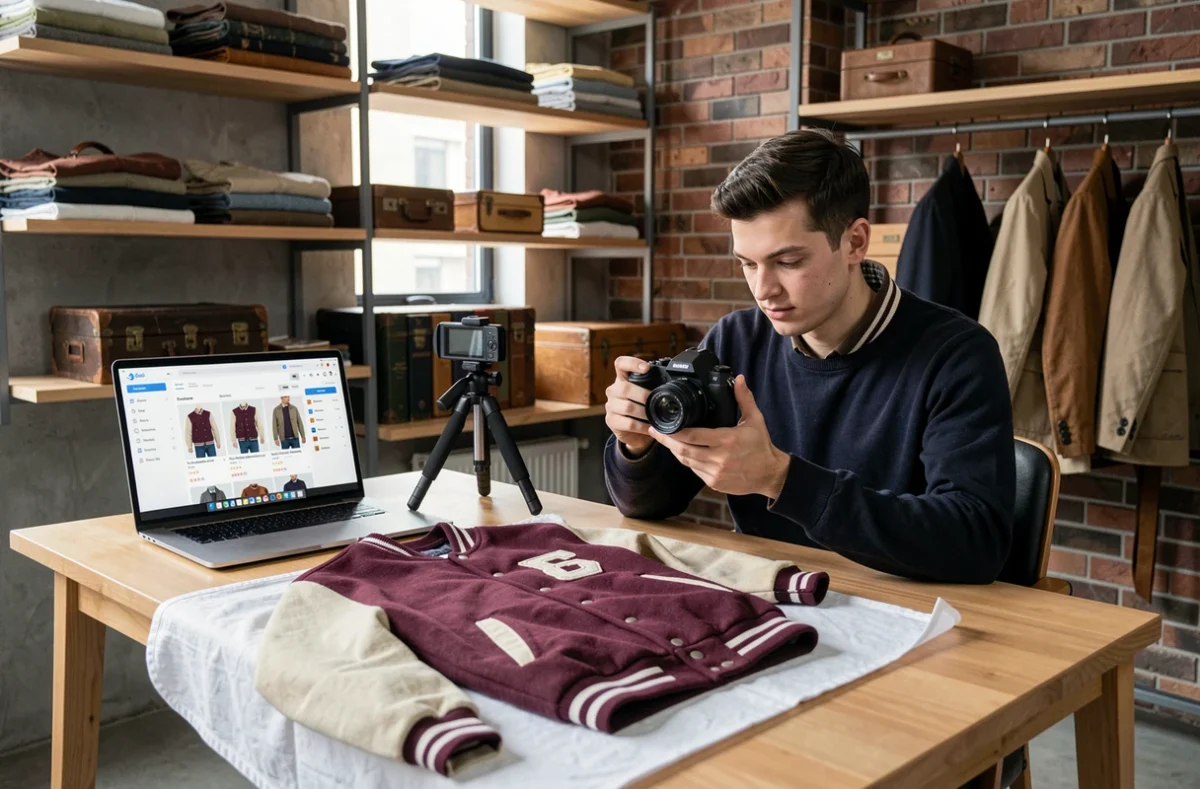
Natural-light photos against a neutral background remain the standard that converts best. A mannequin or shaped hanger gives buyers an idea of how the garment drapes. Modelled photos boost engagement, but take more time per item.
High-quality descriptions directly affect the return rate. In a business where every item is unique, a return means going through the entire relisting process again, along with the time and costs involved. An honest, straightforward description is better than sales copy that leads to disappointment.
The profitability of an online vintage clothing store doesn’t depend solely on buying stock or listing it for sale. It comes down to managing what doesn’t sell, realistically calculating the time spent on each item and ensuring product listings are accurate. These three factors, less visible than sourcing or marketing, make the difference between a business that keeps running and one that runs out of steam after a few months.