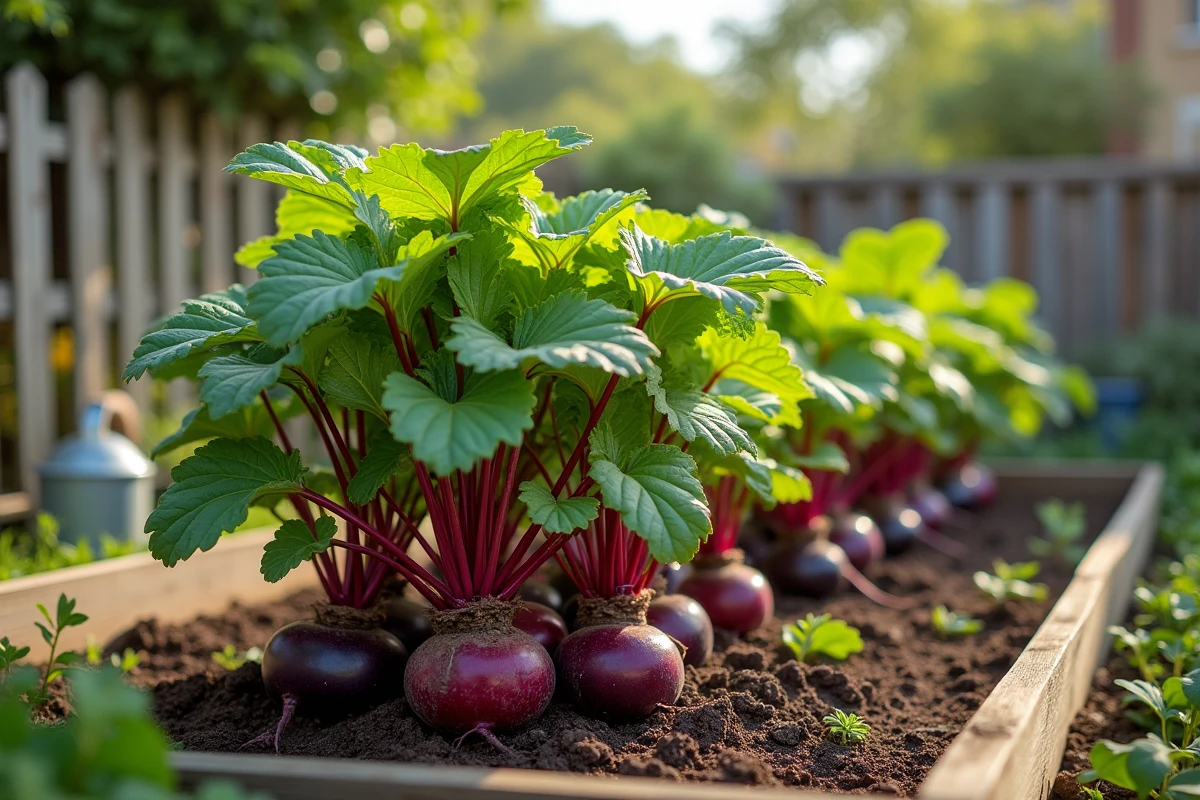
When planting eggplants in a well-exposed bed, the temptation is strong to fill the empty space between the plants with a compact root vegetable. Beets seem ideal on paper: low growth, modest foliage, staggered cycle. In practice, cohabitation requires some precise adjustments for both crops to truly benefit from each other.
Beets at the edge of eggplants: what recent trials show
Classic companion planting guides rarely list the beet-eggplant duo. Feedback published on specialized forums like Tela Botanica or Biau Jardin de Grannod between 2022 and 2024 provides more concrete observations. Several market gardeners describe tests with close planting, with a recurring finding: beets thrive well at the edge of the row, but their growth significantly slows when planted too close to the eggplant’s shallow roots.
The distance most often mentioned in these reports is around two to three hand widths between the eggplant and the beet sowing. Below this, root competition in the top few centimeters of soil hinders tuber development. Here is a detailed guide on the association of eggplant in the vegetable garden on Terre d’Humus that specifies distances and placement logic.
These trials are still described as “unstabilized” by their authors, and feedback varies according to soil type and local climate. We are not yet talking about a validated association like tomato-basil, but a promising avenue to adapt bed by bed.

Soil and watering: balancing two different needs
Eggplants require rich, deep, well-drained soil with generous organic matter. Beets also prefer fertile and moist soil but tolerate slightly less amended ground. The real point of friction is the management of watering at the base of the eggplants.
Eggplants need regular and abundant watering, especially during fruit set. Excess stagnant moisture around the beet promotes fungal diseases at the collar. To mitigate this risk, mulching can be done differently depending on the areas of the bed.
- At the base of the eggplant: a thick mulch (straw, hay) that retains moisture deep down without saturating the surface.
- On the beet row at the edge: a finer mulch or simple regular hoeing, so that the collar stays dry between waterings.
- Between the two: a strip of bare soil a few centimeters wide, which serves as a buffer and prevents the eggplant mulch from touching the lower leaves of the beet.
This watering zoning may seem meticulous, but it makes the difference between a healthy beet and a collar that rots during the season.
Growing calendar: staggering sowings to avoid competition
Eggplants are planted after the last frost risks, when the soil consistently exceeds warm temperatures. Beets, on the other hand, can be sown earlier, as soon as the soil is warmed at the surface. Sowing beets two to three weeks before planting eggplants gives them a root head start that reduces direct competition.
Météo-France has observed an increase in spring heat waves since the early 2020s, with episodes exceeding 30 °C as early as May in some regions. This early onset of high temperatures has two contradictory effects on our duo.
What heat changes for each crop
Despite its image as a sun vegetable, eggplants experience thermal stress beyond a certain threshold. Flowers abort, fruit set slows. Beets, with their low and dense foliage, create a micro-vegetative cover that limits soil heating around the eggplant plants. Here we see a concrete benefit of the association: the beet acts as a living ground cover.
Conversely, beets bolt to seed more quickly under high heat. To delay this bolting, we favor varieties suited for late sowing, and stagger sowings every three weeks until early summer.
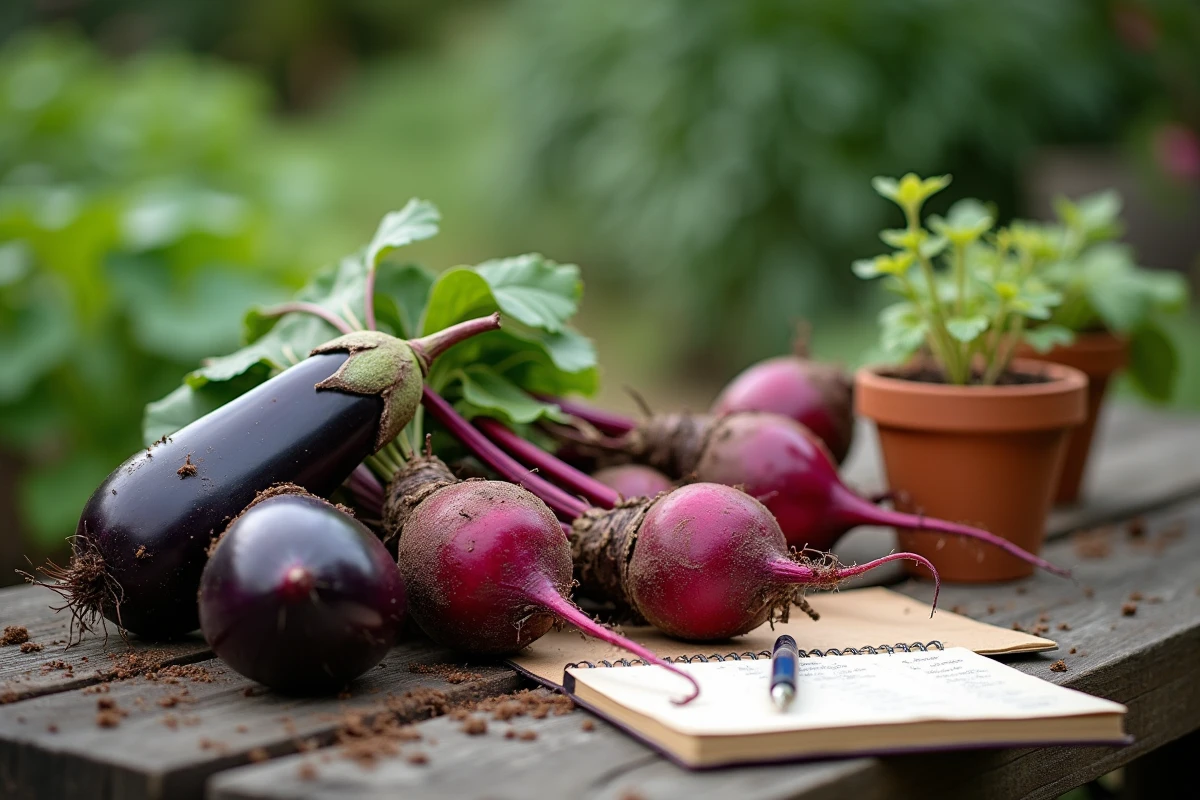
Neighboring plants in the vegetable garden: what to plant around to strengthen the bed
Beyond the beet-eggplant duo, the choice of neighboring crops in the same bed or adjacent beds changes the game. Onions and celery are two allies frequently mentioned for eggplants: their scent helps repel certain pests, and their footprint remains modest.
Lettuce also fits easily between eggplant plants early in the season, before the foliage takes up all the space. It frees up space when the beet starts to swell, preventing congestion in the row.
- Onion or shallot at the end of the row: their root system does not compete with the beet, and their presence helps limit aphids on the eggplant.
- Celeriac or celery in the neighboring bed: a good companion for eggplant according to most companion planting sources, it also appreciates rich soil and consistent watering.
- Carrot alternating with beet: the two roots do not explore exactly the same soil depth, which reduces competition.
- Avoid planting tomatoes right next to eggplants if they are already present: both solanaceous plants share the same diseases, and concentrating the family in a small space increases health risks.
Rotation the following year
After a season of eggplants, do not replant solanaceous crops in the same spot for at least two years. Beets, however, can return earlier in the rotation if the soil has been properly amended in the meantime. Ideally, alternate with legumes (beans, peas) that restore the nitrogen consumed by the eggplant.
The beet-eggplant association is not a classic in the vegetable garden, and that is precisely what makes it interesting to test. The main point of vigilance remains the differentiated management of water and mulching in the same bed. With sufficient spacing and a staggered sowing schedule, both crops can coexist without hindrance, and the beet provides a real soil cover service during heat peaks.