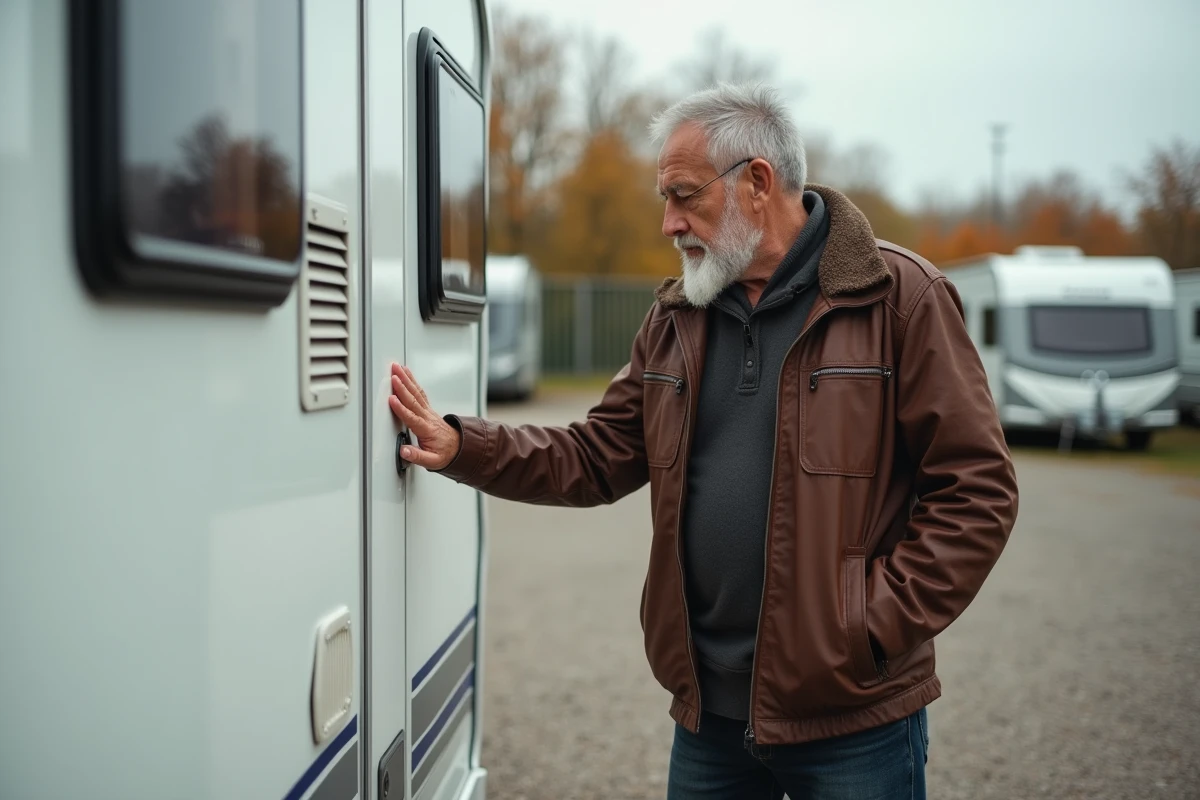
Buying a caravan when it serves as a primary residence is not at all the same approach as choosing a model for vacations. The budget, technical criteria, and available assistance change radically.
Each traveling family must deal with specific constraints: weight of the towing vehicle, size of the pitches in the reception areas, access to CAF loans. Here are the concrete points that make the difference between a successful purchase and an unpleasant surprise.
Size of the caravan and constraints of reception areas
Before even looking at listings, you need to check a point that many overlook: the surface allowed per pitch in the reception areas of your region. Local urban planning policies (PLU, PLUi) increasingly include specific requirements for family pitches and grounds, with rules on maximum capacity per pitch.
In practical terms, large caravans known as “American” pose access problems in many areas. Feedback from mediation associations indicates a growing tension between the size of new caravans and the physical limits of pitches: width of access roads, fire safety distance between vehicles, maneuvering space for the towing vehicle.
Several families are now turning to more compact models to avoid these blockages. This is a decision to make early in the search, as it conditions everything else: the necessary towing weight, the price, and even eligibility for certain assistance. The purchase of a caravan for traveling people follows criteria quite different from those of the tourist market.

Towing weight and compatibility with the towing vehicle
You found a caravan at a good price, but can your car tow it? This technical point is the classic trap of buying used.
The total laden weight of the caravan must not exceed the GTW of the towing vehicle, minus the weight of the vehicle itself. This information is found on the vehicle’s registration document (box F.3). A residential caravan, with water, gas, everyday accessories, and family belongings, weighs significantly more than its empty weight stated by the manufacturer.
Checks to make before signing
- Compare the MAM (maximum authorized mass) of the caravan with the towing capacity of the towing vehicle, including the actual daily load
- Check the condition of the caravan’s braking system, especially on a used model over five years old, as inertia brakes wear out without visible signs
- Inspect the sealing points: window seals, the edge of the roof hatch, and cable passages. Undetected water infiltration can degrade the structure within months
- Inspect the floor from underneath to spot signs of mold or delamination, indicating an old and poorly repaired water damage
In the used market, a seller who refuses to allow inspection of the floor is likely hiding a problem. Don’t hesitate to walk away.
CAF caravan loan: rules that vary from one department to another
The caravan loan offered by the Family Allowance Funds is a financing lever specific to traveling people. It allows for the purchase or repair of a mobile primary residence. This credit is interest-free, and in some cases, the assistance may even be non-repayable.
The problem is that the conditions change radically depending on the department of affiliation. Some CAFs impose a seven-year renewal period before being able to request a loan again, while others set this period at five years. The price caps for the caravan, the required family quotient, and the supporting documents also vary.
Anticipate the request rather than react in urgency
Contacting the CAF of your municipality several months before the planned purchase changes the game. You will obtain the maximum fundable amount, the required family quotient, and the list of supporting documents. With this information, you can target caravans within the right price range instead of falling in love with a model out of budget.
A common mistake is to buy the caravan first and then request the loan afterward. However, some CAFs require that the application be submitted before the sales contract is signed. Checking this point avoids losing the benefit of the assistance.
Used or new: the real calculation for a residential caravan
The new market offers manufacturer guarantees and reliable waterproofing during the first years. The used market allows access to more spacious models for the same budget.
A residential caravan undergoes much more intensive use than a seasonal leisure vehicle. The gas heating operates several months a year, the water system is used daily, and the floor bears constant traffic. The wear of a caravan lived in year-round is nothing like that of a camping model used three weeks each summer.
For a used model, the areas to inspect as a priority are the gas system (connections, pipes, ventilation), moisture protection (seals, roof covering), and the condition of the chassis. A recent model with an unmaintained gas system can cost more to bring up to standard than an older model in good overall condition.
- New: manufacturer warranty, no risk of hidden infiltration, but higher price and sometimes limited size options due to budget
- Recent used (less than five years): good compromise if the maintenance history is documented and the waterproofing check has been passed
- Older used: attractive price, but budget for refurbishment of gas, water, and safety accessories should be planned
The choice directly depends on the amount of the CAF loan obtained and the family’s own budget. Getting estimates for refurbishment work before buying avoids unpleasant surprises that turn a good deal into a financial pitfall.
Buying a caravan intended to serve as a primary residence is prepared like a real estate project: checking financing, serious technical inspection, compatibility with the reception site. Families that take the time to cross-check these three parameters before signing leave with a vehicle suited to their daily life, not with a compromise that will be costly to correct.