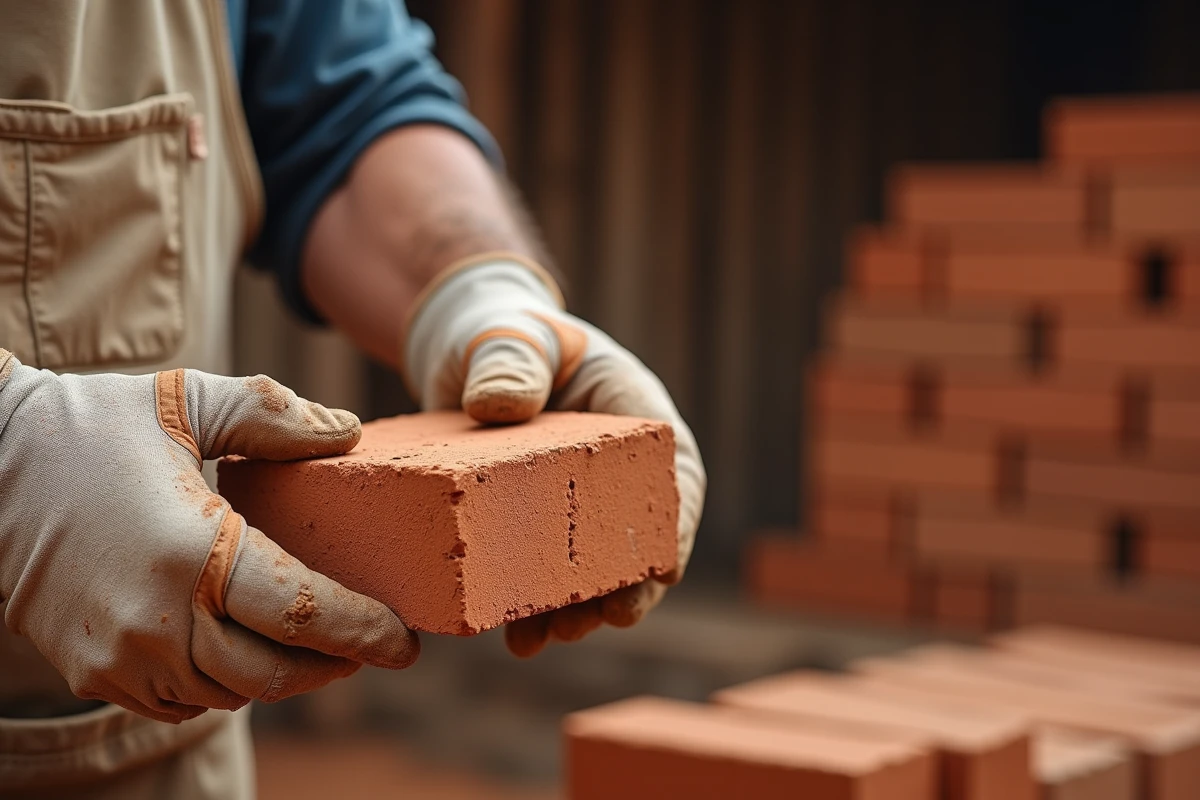
The composition of a brick directly determines its mechanical resistance, thermal behavior, and durability over time. Comparing raw materials and firing processes allows for measuring performance gaps between the major families of bricks used in construction.
Thermal conductivity and density by type of brick
The physical properties vary greatly from one brick to another. The table below summarizes the differences between the main categories available on the French market.
| Type of brick | Dominant raw material | Relative density | Thermal performance | Main use |
|---|---|---|---|---|
| Solid fired clay brick | Fat clay, silt | High | Medium | Load-bearing walls, renovation |
| Hollow fired clay brick | Clay, slate soil | Medium | Good (air cavities) | Common structure, partitions |
| Monomur brick | Clay + complex cellular structure | Medium to low | Very good | Insulating load-bearing wall without additional cladding |
| Refractory brick | High alumina clay | Very high | Low (high conductivity) | Chimneys, ovens, barbecues |
| Cement brick | Portland cement, sand, aggregates | High | Low | Non-load-bearing walls, fences |
The monomur brick stands out distinctly: its cellular geometry multiplies the internal air layers, providing sufficient thermal insulation to eliminate the need for insulating cladding in certain wall configurations. In contrast, the dense and conductive refractory brick accumulates heat instead of blocking it, which explains its exclusive use in high-temperature environments.
To delve deeper into the manufacturing and composition of bricks, one must go back to the raw material itself: clay, whose geological origin conditions the color, plasticity, and strength of the finished product.
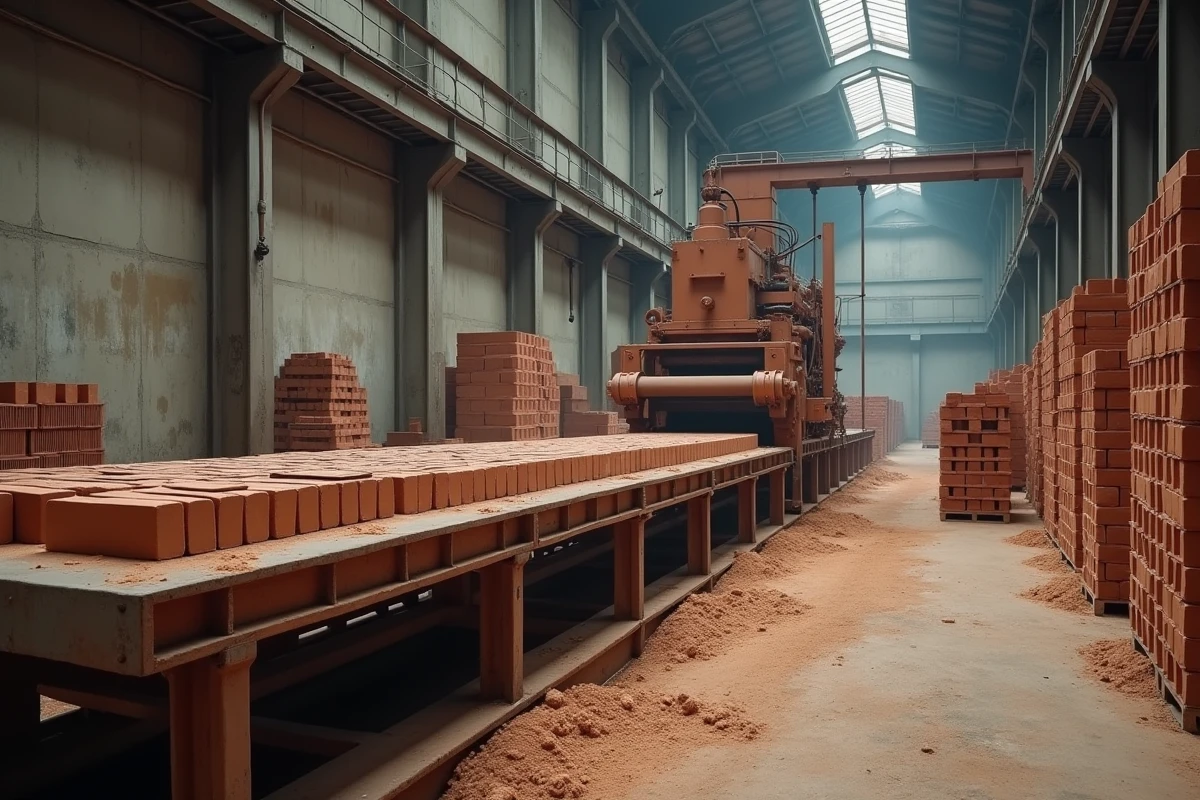
Clay and firing: the two variables that change everything in brick manufacturing
Clay is not a uniform material. Fat, silty, or slate clays have distinct mineralogical compositions that guide the choice of the final product. Fat clays, being more plastic, are used to make lattice blocks and structural bricks. Silts, being finer, are used in the composition of handmade facing bricks.
Before any shaping, the clay undergoes grinding and then mixing with water to obtain a homogeneous paste. The water dosage is a determining parameter: too much water weakens the brick during drying, while too little prevents proper molding.
From shaping to firing
Two shaping techniques dominate production:
- Hand molding (or its mechanical imitation): the clay paste is pressed into a sanded mold, giving facing bricks their characteristic irregular texture.
- Extrusion: the paste is pushed through a die that determines the product’s cross-section. This method produces hollow bricks, lattice blocks, and monomur bricks with their networks of cavities.
- Pressing: used for cement bricks or certain refractory bricks, it compacts a semi-dry mixture under high pressure without going through a plastic paste.
The firing process transforms a fragile clay paste into a durable building material. The kiln temperature determines the final hardness and porosity of the brick. Common bricks are fired at relatively high temperatures in continuous tunnel kilns, while refractory bricks require even higher temperatures to withstand the extreme thermal stresses of a fireplace or industrial oven.
Cement brick or fired clay brick: what the composition changes on site
The cement brick (Portland cement, sifted sand, sometimes slag or fly ash) does not go through a kiln. It hardens through the hydration of the cement, a chemical process at room temperature. This process makes it cheaper to produce, but its thermal performance remains significantly lower than that of fired clay.
Fired clay retains heat better in winter and coolness in summer due to its natural thermal inertia. The cement brick, being more permeable to moisture if untreated, often requires a protective coating on the exterior facade.
Mortar and implementation
The choice of mortar directly depends on the type of brick. Traditional fired clay bricks are laid with cement or bastard mortar (cement + lime). Monomur bricks, on the other hand, are assembled with a thin joint adhesive mortar that reduces thermal bridges at the joints, thus preserving the continuity of insulation.
The cement brick tolerates standard mortar, but its dimensional regularity is often inferior to that of processed fired clay products, which increases the necessary joint thickness and, consequently, the linear thermal losses.
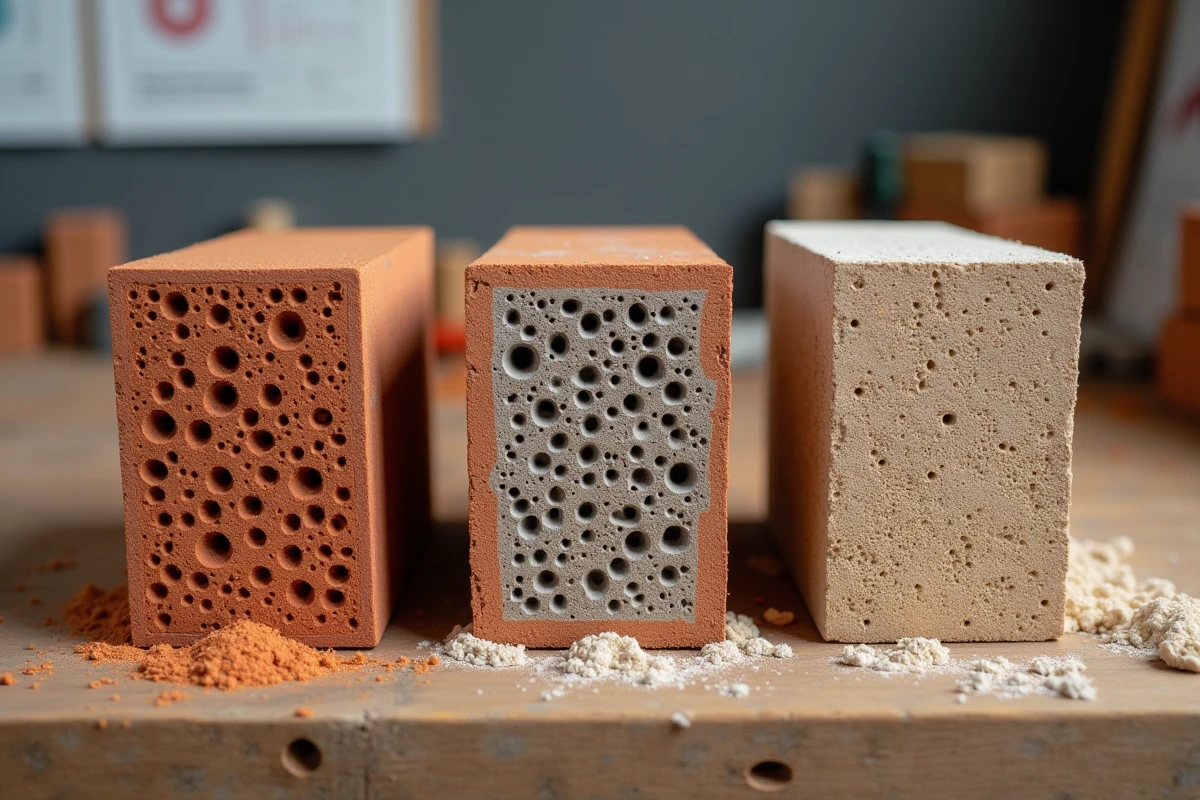
Monomur brick and thermal regulation: a special case in masonry
The monomur brick deserves separate analysis. Its complex cellular structure allows it to simultaneously perform load-bearing and insulating functions. In projects subject to current thermal requirements, this dual function reduces the number of trades on site (no need for an additional insulation installer).
The downside: its unit cost is higher than that of a standard hollow brick, and its implementation requires precise laying with adhesive mortar. A joint that is too thick or misaligned creates a thermal bridge that negates part of the insulating benefit.
In contrast, a classic hollow brick combined with external thermal insulation (ITE) or internal thermal insulation (ITI) achieves comparable, sometimes superior performance, but at the cost of a greater total wall thickness and increased implementation complexity.
The choice between these two approaches depends on the overall budget, the desired living space, and the local climate. The monomur brick remains more relevant in temperate climate regions where temperature variations are moderate, while composite walls (hollow brick + ITE) are essential in areas with harsh winters.