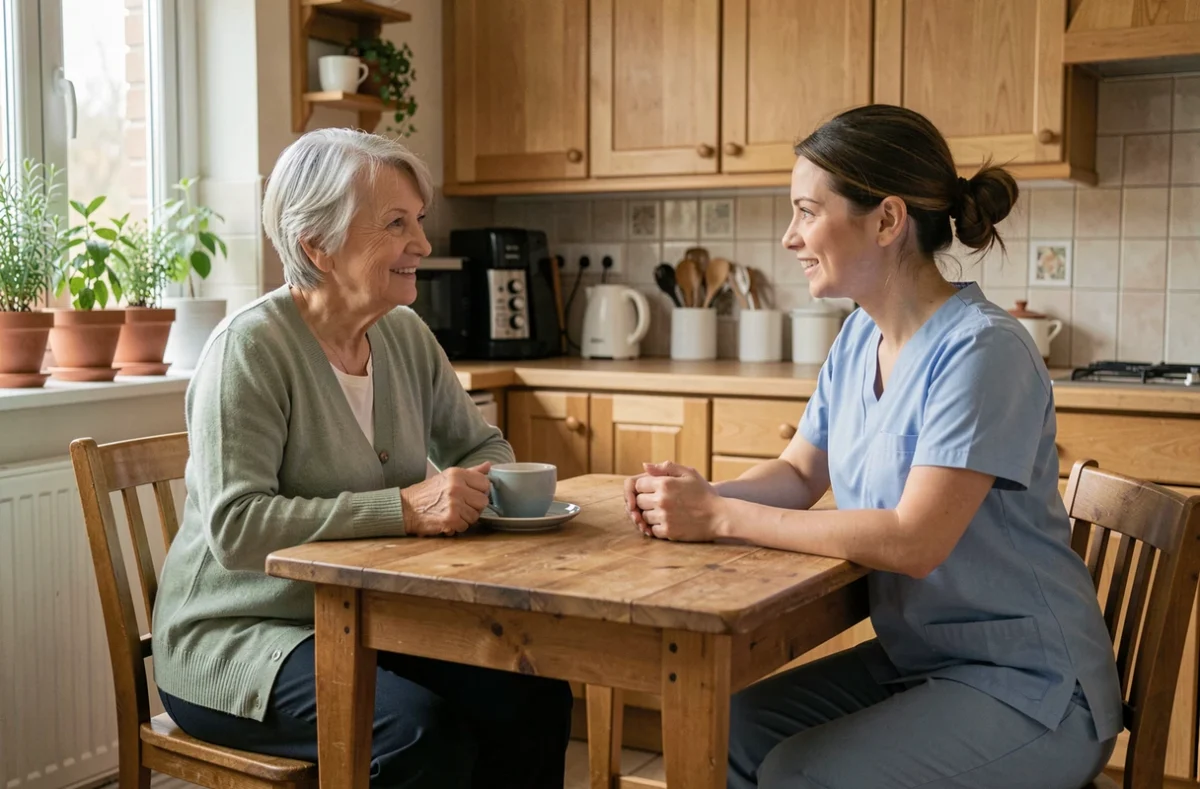
The home care sector for the elderly is undergoing a profound transformation. Since decree n° 2023-608 of July 13, 2023, the former structures (SAAD, SSIAD, SPASAD) are converging towards two formats: the home autonomy service (SAD) “aid” and the mixed SAD, which integrates assistance and care. This reorganization is fundamentally changing how seniors access daily support.
Reform of home autonomy services: what changes in the organization of care
Before the reform, a senior with reduced autonomy could simultaneously rely on a home assistance service for daily tasks and a nursing service for medical follow-up, without communication between these two structures. The convergence mandated by the July 2023 decree aims to correct this compartmentalization.
In Guer, Brittany, a home assistance association and a SSIAD have initiated this convergence. Feedback from the field indicates improved information sharing, smoother coordination on complex situations, and joint interventions. The professionals involved consider the experience positive.
However, this same local experience reveals an identified risk: insufficient funding undermines the implementation of the mixed model. The convergence of structures requires investments in coordination, training, and digital tools that not all regions can mobilize at the same pace. To better understand the diversity of available services, it is useful to consult the services offered by Happy Seniors, which cover several forms of support tailored to individual needs.
Home care for seniors: beyond household tasks
The common representation of home care often limits it to cleaning or shopping. The reality of needs is broader and more technical.
Home support services today cover several dimensions:
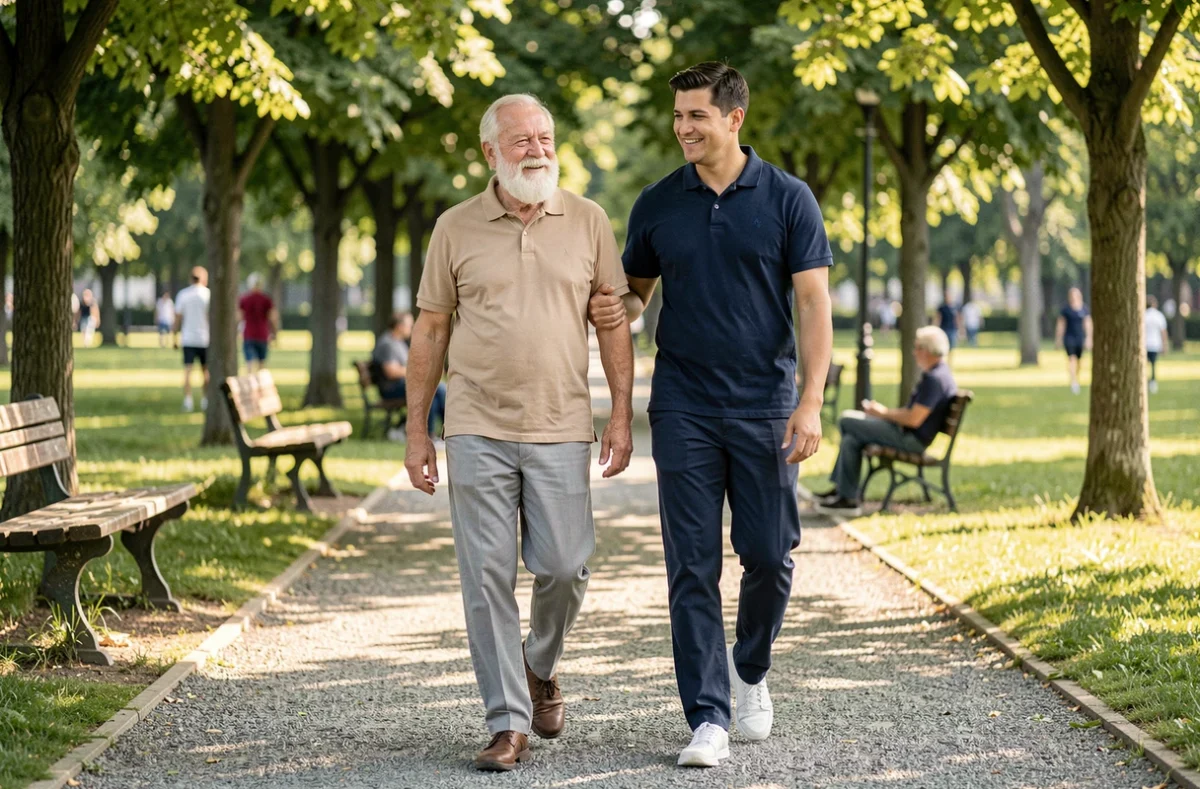
- Assistance with daily living activities: bathing, dressing, meal preparation, help with mobility inside and outside the home
- Social and relational support: regular presence that breaks isolation, accompaniment during outings, cognitive stimulation through adapted activities
- Coordination with health professionals: transmission of information to nurses, primary care physicians, or physiotherapists, monitoring of general health
- Safety devices: emergency alarms, housing adaptations to prevent falls
Maintaining autonomy depends as much on relational quality as on technical service. A caregiver who notices a change in behavior or a loss of appetite plays a sentinel role that spaced medical consultations cannot fulfill.
Funding for home care: APA, pension funds, and complementary schemes
Accessing a support service requires navigating between several funding mechanisms. No single mechanism covers all costs for the majority of beneficiaries.
The personalized autonomy allowance (APA) remains the main lever for people with reduced autonomy. Paid by the departmental council, it finances a personalized assistance plan established after assessing the degree of dependence (GIR grid). However, recent data from DREES indicates a decrease in the number of APA beneficiaries for the first time since 2020, while aid for disabled individuals continued to increase.
This evolution deserves attention. It does not necessarily reflect a decline in needs related to aging, but possibly threshold effects in eligibility criteria or difficulties accessing administrative processes.
Other sources of funding complement the APA:
- Financial aid from pension funds (notably the Retirement Insurance, which offers assistance plans including prevention packages)
- The disability compensation benefit (PCH) for people with disabilities, managed by the MDPH
- CESU vouchers, which entitle holders to a tax credit
- Social assistance from mutual insurance and complementary health plans
Family caregivers and support for seniors: a strained link
Support for seniors does not rely solely on professionals. A significant portion of daily assistance is provided by relatives, often a spouse or child. This role of family caregiver is often performed without training, without respite, and without sufficient financial recognition.
A recent publication from DREES indicates that one in three caregivers expresses a need for respite, and this need remains unmet for half of them. Support and respite platforms exist in the territory, but their geographical coverage is uneven.
The law of April 8, 2024, known as the “Aging Well” law, has strengthened the protective framework for users and caregivers. It includes provisions on combating abuse and modifies certain obligations of support structures. Field feedback varies on the real impact of these measures: the text establishes a framework, but its application depends on the resources allocated locally.
Training and supporting caregivers: a documented necessity
Training programs for family caregivers are offered by some associations and pension funds. They cover technical gestures (assistance with transfers, fall prevention), understanding pathologies (Alzheimer’s, Parkinson’s), and managing burnout.
Access to these trainings remains conditioned by the caregiver’s availability, which presents a paradox: those who need it most are also those who have the least time to participate.
The home support sector for seniors is gradually structuring itself around a coordinated pathway logic, blending assistance, care, and prevention. The quality of life for elderly individuals directly depends on this, as does that of their relatives. Regulatory tools now exist. Their concrete implementation, territory by territory, remains the main challenge for the coming years.