The chemical substances present in a home can interact with an infant’s metabolism long before birth. Providing a healthy environment for your baby goes beyond choosing green paint for the nursery: it involves understanding which products enter the home, which accessories pose a real risk, and which regulatory guidelines help distinguish useful items from marketing hype.
Endocrine disruptors in everyday products: what the European regulation changes
A new European labeling system for endocrine disruptors is gradually coming into effect. The labeling of substances already on the market must be updated by November 1, 2026, while mixtures, including some household products, have a deadline until May 1, 2028. For parents, this means that reading labels will become more reliable for cleaning products and cosmetics used around the baby.
While waiting for this compliance, caution remains essential. Air fresheners (incense, deodorizers, scented candles) emit potentially toxic chemical substances. French health recommendations advise limiting the number of household products and favoring simple formulas: baking soda, white vinegar, black soap, or products bearing a recognized environmental label.
To explore ranges of childcare products compatible with this approach, you can visit the Bébé Bonheur page which lists product lines for infants.
Baby sleep accessories: items discouraged by HAS
The childcare market is full of accessories marketed as protective or comfortable for infant sleep. The Haute Autorité de santé and the French health booklet convey a different message.
Here are the accessories explicitly discouraged:
- Bumper pads, baby wedges, and head supports, which may cover the infant’s face during sleep
- Pillows, comforters, and soft objects placed in the crib, which increase the risk of suffocation
- Some bed reducers, which HAS qualifies as unnecessary, harmful, and dangerous materials
These recommendations, reiterated in 2026, contrast with what most online baby registries propose. A crib, a firm mattress that fits the crib precisely, and a sleep sack suitable for the season constitute the bare minimum. Any additional accessory in the sleeping space should be compared with official recommendations before purchase.
Baby diapers: ecological labels and health safety do not say the same thing
The confusion between ecological labels and health guarantees is common. The health quality of a diaper is not limited to its ecological label. Diapers fall under the European general product safety framework and the REACH regulation. Manufacturers are responsible for the compliance of their products, and the DGCCRF conducts sampling and analysis in the French market.
An organic or ecological label certifies environmental criteria (source of raw materials, production impact) but does not systematically cover all toxicological tests. In contrast, DGCCRF evaluations focus on the presence of chemical substances in direct contact with the infant’s skin.
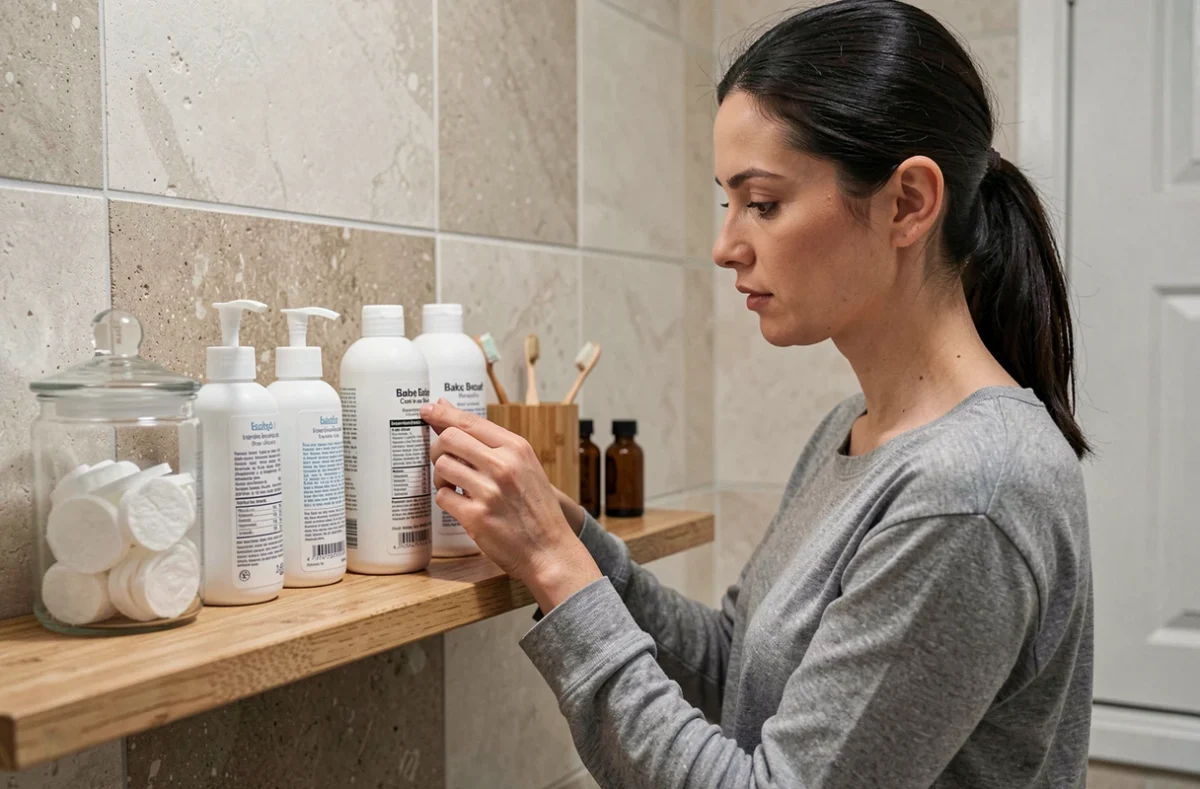
Reading a diaper label thus requires distinguishing between two levels of information: the environmental aspect (raw materials, biodegradability, place of manufacture) and the health aspect (results of dermatological tests, REACH compliance, absence of fragrances or lotions). A product can be ecological without being the safest dermatologically, and vice versa.
Indoor air quality in the baby’s room: concrete actions and known limits
Ventilating the home for at least ten minutes a day, even in winter, remains the simplest measure to renew indoor air. Checking the proper functioning of mechanical ventilation (VMC) and not smoking indoors complement this basic foundation.
Renovations in the baby’s room (painting, flooring, assembling new furniture) generate volatile organic compounds that persist for several weeks. Health recommendations advise planning these works at least one month before the arrival of the infant to allow for sufficient dissipation.
The available data do not allow for precise quantification of the time needed for each type of material to stop emitting VOCs. Field feedback varies on this point depending on ventilation, ambient temperature, and the nature of the products used. One month is a minimum, not an absolute guarantee.
Food and containers: the glass reflex rather than plastic
For storing and reheating baby food, glass containers limit the migration of chemical substances into the food. Heat accelerates the transfer of certain compounds from plastics, including those labeled “BPA-free,” into the food.
For fruits and vegetables, peeling and washing products reduces potential pesticide residues. Favoring organic products decreases exposure, without completely eliminating it: organic certifications allow a limited number of treatments.
- Reheat meals in glass or stainless steel containers, never in plastic
- Store homemade purees in glass jars with airtight lids
- Always wash fruits and vegetables, organic or not, before preparation
A healthy environment for a baby is built through an accumulation of simple, rarely spectacular actions. Labels will become more readable with the new European regulation, but the distinction between marketing and health safety remains, for now, the responsibility of parents. Cross-referencing official sources (HAS, DGCCRF, health booklet) with the labels displayed on products is the most reliable reflex before each purchase.