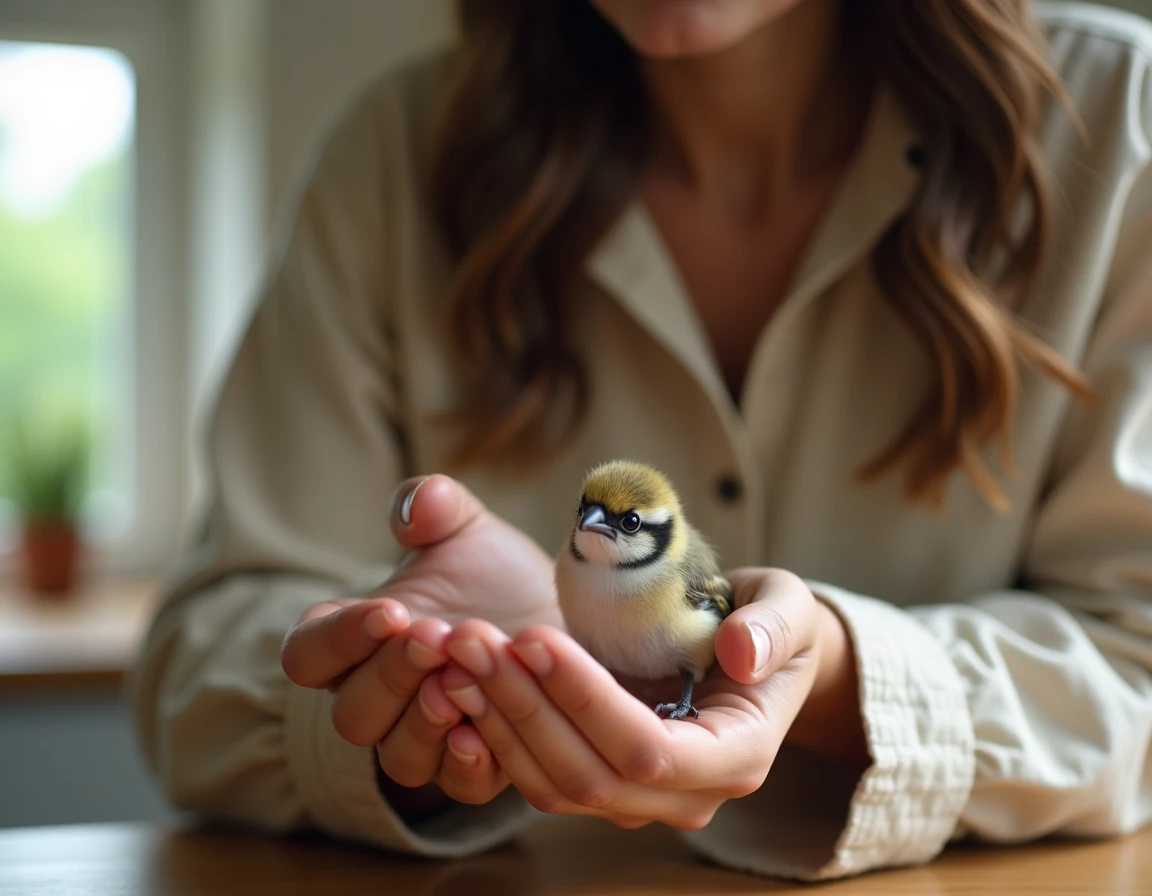
A fledgling great tit on the ground is not always in danger. Before any intervention, distinguishing between a young bird in a normal phase of emancipation and a true nestling in distress determines the subsequent actions. The great tit, a common insectivorous species in gardens, produces broods that leave the nest before they can fly, complicating the diagnosis for an untrained observer.
Fledgling tit on the ground: distinguishing real distress from normal fledging
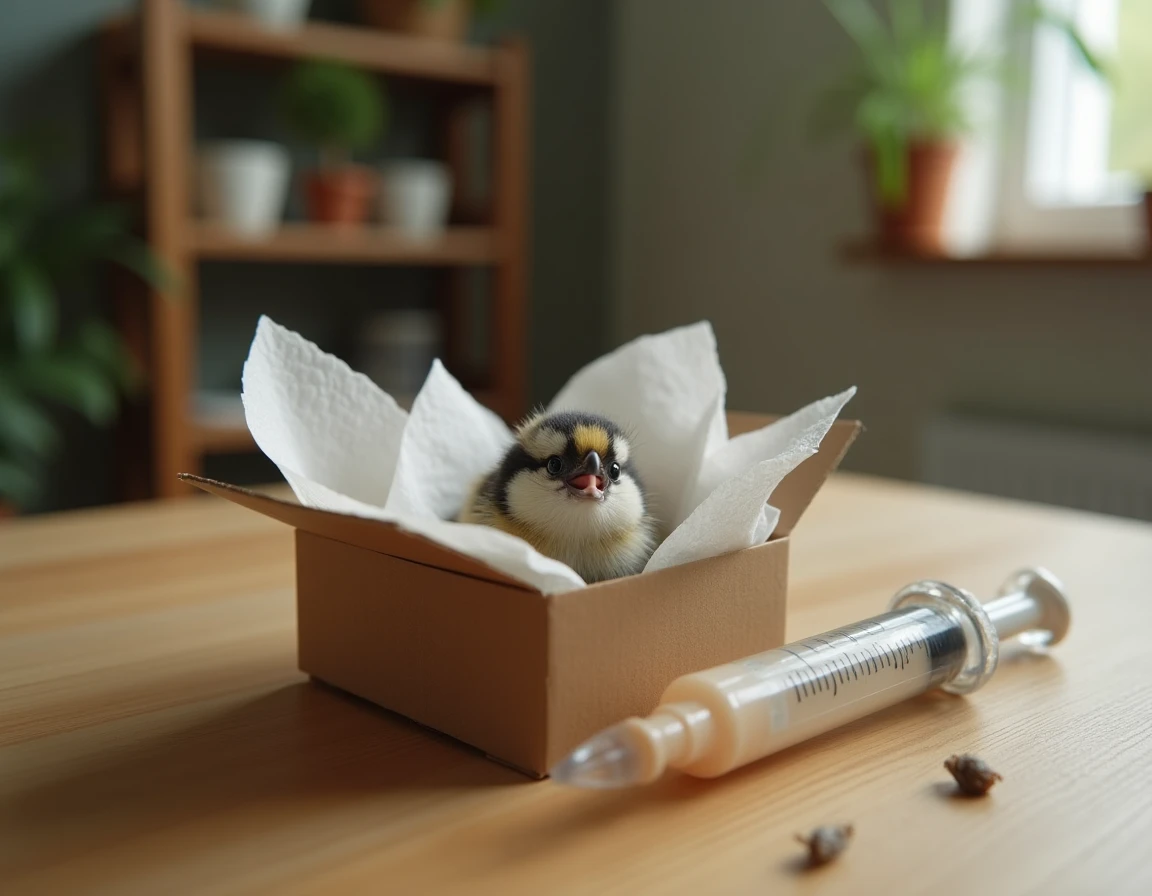
The main trap is to collect a fledgling that does not need help. In passerines like the great tit, the stage where the young bird hops out of the nest corresponds to a normal phase of emancipation. The parents continue to feed it on the ground for several days, even if they are not seen.
A fledgling that is already feathered and mobile is generally not abandoned. It opens its eyes, flaps its wings, and tries to perch. In this case, the best intervention is to do nothing, or to move it a few meters if it is on a road or within reach of a cat.
The real alarm signal concerns a nestling that is bare or nearly bare, with closed eyes, unable to stand on its feet. This stage means it has fallen prematurely. If the nest is accessible and intact, the priority remains to place it back in there.
Contrary to popular belief, touching a fledgling does not cause rejection by the parents: birds have a very limited sense of smell. Knowing how to feed a fledgling great tit becomes necessary only when the nest is destroyed, the parents have been absent for several hours, or the fledgling is visibly injured.
Suitable food for insectivorous fledglings: caterpillars, worms, and soft food
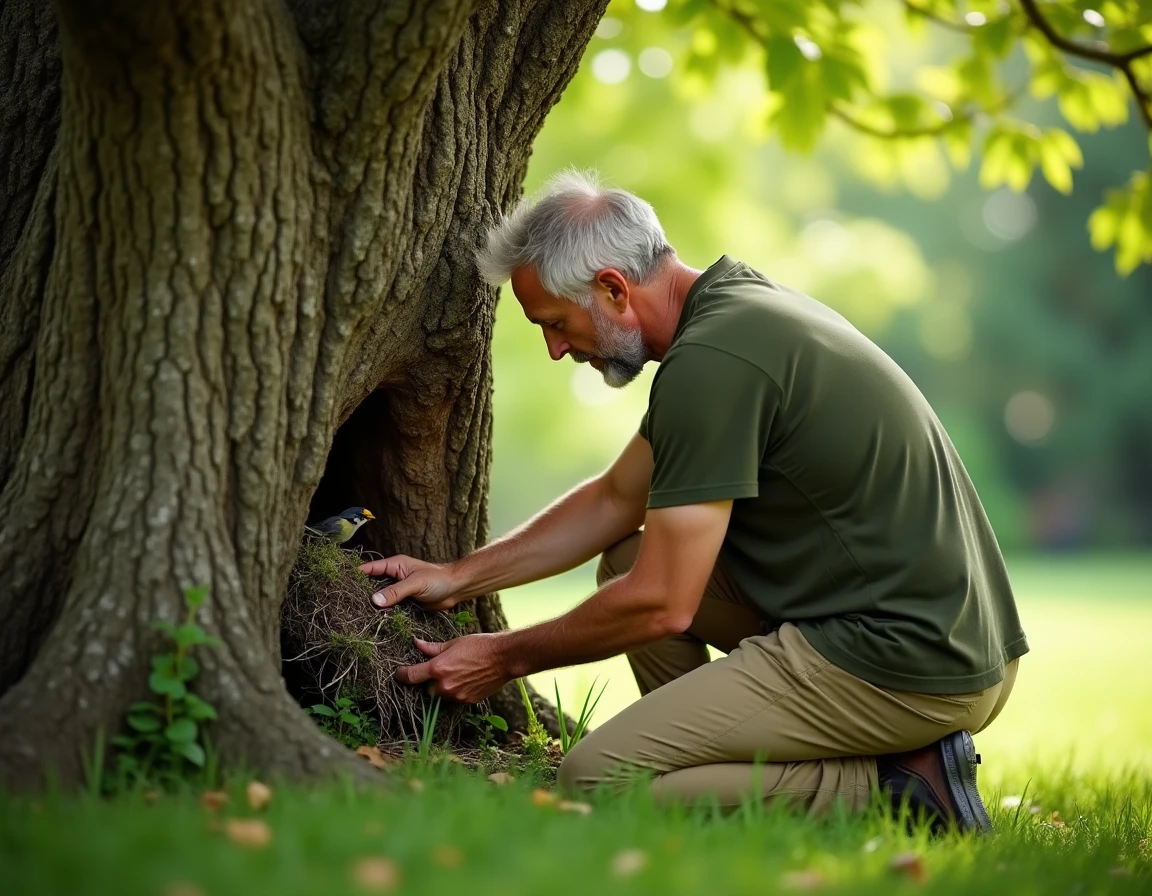
The great tit is an insectivorous species. In the nest, the parents mainly bring caterpillars and small soft insects. Reproducing this natural supply is crucial for the survival of the rescued fledgling.
Preferred foods
- Fresh caterpillars remain the food closest to the natural diet. If unavailable, small mealworms (purchased from pet stores) are suitable, provided they are crushed for very young fledglings that cannot swallow them whole.
- Commercial insectivorous soft food, moistened, is an acceptable supplement for a short duration. It provides animal protein in a form that is easy to administer with fine tweezers or a stick.
- Garden insects (aphids, small spiders, larvae) can complement the diet if the quantity of mealworms available is insufficient.
What not to give
Bread, milk, dry seeds, or fruits should be avoided. An insectivorous fledgling cannot digest cereals or dairy products. Wet bread, often offered by reflex, causes serious digestive issues in such a fragile organism.
Hydration comes from the food itself. If the fledgling appears dehydrated (wrinkled skin, dry beak), a few drops of lukewarm water placed on the edge of the beak, without forcing it open, are sufficient. Pouring water directly into the throat risks causing a fatal choking.
Feeding frequency and survival conditions in temporary captivity
A very young great tit fledgling requires frequent feeding, from sunrise to sunset. The parents naturally feed their young every fifteen to twenty minutes during active hours. In temporary captivity, a feeding rate of about once every thirty minutes remains a viable minimum for a nestling.
The fledgling should be placed in a container lined with absorbent paper or soft fabric, protected from drafts. Heat is a critical factor: a bare nestling cannot regulate its body temperature. A heating pad set to low temperature, placed under the container (never in direct contact), maintains sufficient warmth.
Some daily points to monitor:
- Droppings should be regular and wrapped in a white membrane. Their prolonged absence indicates a digestive problem or refusal to eat.
- The fledgling should react to noise or light by opening its beak. An apathetic young bird that no longer begs for food requires a quick transfer to a care center.
- The container should be cleaned after each meal to limit bacterial growth.
Gradual weaning and release into the wild
Weaning is the most delicate stage. Gradually reducing the amount of food rather than stopping abruptly allows the fledgling to develop its foraging instinct. When the young bird begins to peck at the mealworms placed in its container, the frequency of manual feedings can decrease.
The release should not occur until the fledgling can fly properly for several meters and feed independently. A premature release is tantamount to a death sentence.
Preparing the outdoor environment
A garden with hedges of local species, a clean water source, and sufficient vegetation to shelter insects offers the best chances for reintegration. Installing a water dish near the release site facilitates the transition during the first few days.
Keeping wild birds is prohibited in France, except in temporary emergency situations before transfer to an authorized rehabilitation center. Contacting the LPO (League for the Protection of Birds) or the nearest care center remains the priority as soon as a fledgling is rescued. The goal of an individual is limited to stabilizing the health of the bird while arranging for its transport to trained caregivers, not to conduct a complete breeding.