
A vape that blinks three times, a screen that displays “short,” or a draw that no longer produces vapor: these micro-failures are part of the daily life of electronic cigarette users. Young vapers, often without a paper manual or an adult to ask, develop their own diagnostic reflexes. Most of the time, these reflexes are built outside of any structured framework, based on forums, short videos, and personal trial and error.
Decoding a blink or error message on a vape
The majority of vaping devices communicate through coded light signals. A quick blink may indicate a low battery, while a series of slow flashes signals a connection problem between the cartridge and the body of the device. Some newer models display a word on a small screen: “short,” “check atomizer,” or “low battery.”
The problem is that these codes vary from brand to brand. Three blinks on one device mean “empty battery,” while on another it means “short circuit detected.” This lack of standardization forces each user to look up the exact meaning for their specific model.
When a puff blinks unusually, the first reflex learned among peers is to check if the problem comes from the contact between the cartridge and the battery. A simple cleaning of the connector with a dry cotton swab resolves a significant portion of the issues reported in dedicated discussion threads.
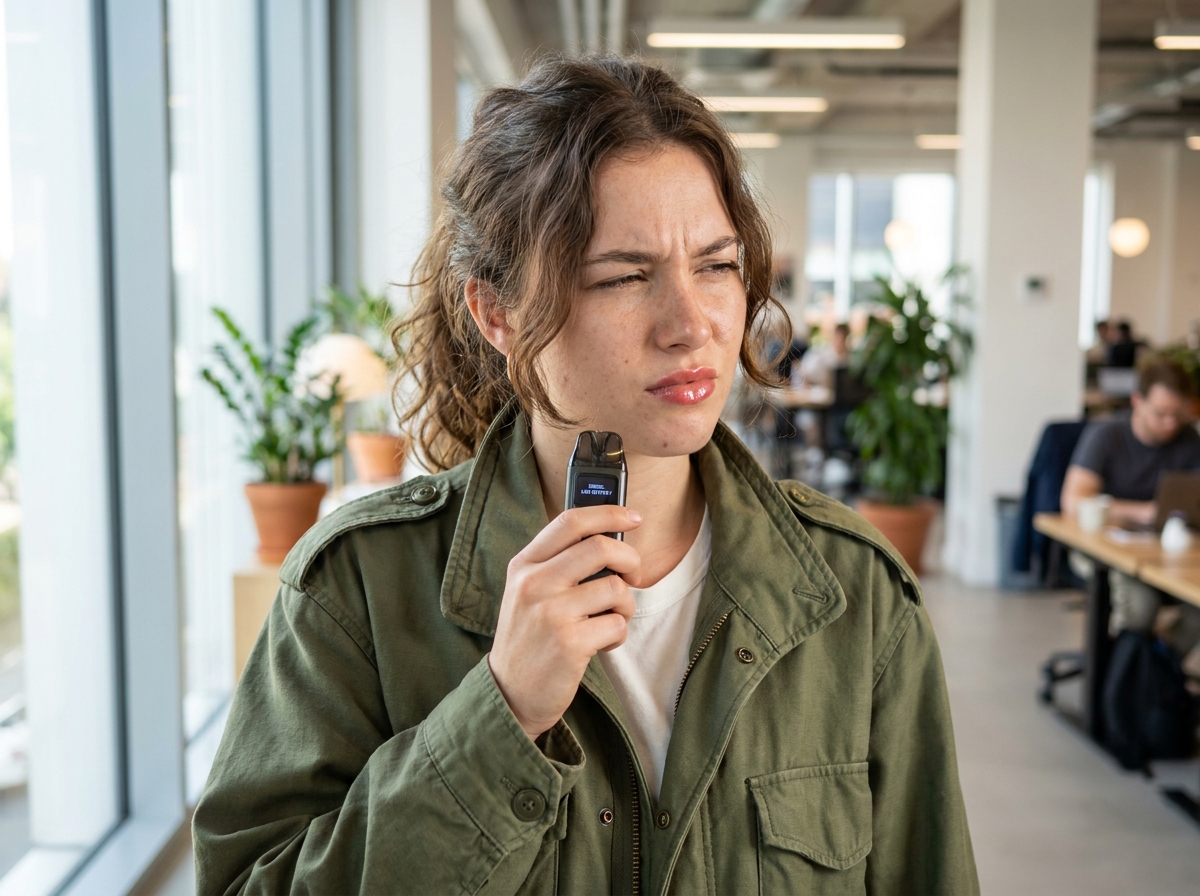
Sources of technical learning among young vapers
Teenagers and young adults do not consult manufacturer manuals. Their learning journey goes through three main channels, often combined.
- Short videos on social platforms, where users film the disassembly of a device, the replacement of a pod, or the cleaning of an oxidized connector, in under two minutes.
- Specialized forums and community groups, where a message describing a specific symptom (leak, burnt taste, blinking) receives detailed responses from other users who have encountered the same problem.
- Direct peer-to-peer transmission, in high school or among friends: a friend who has already solved the issue shows the exact action to replicate.
This community learning mode works quickly, but it has a structural flaw: there is no filter distinguishing reliable advice from dangerous manipulation. Forcing the charging of a swollen battery, for example, is advice that circulates even though it poses a real risk of thermal incident.
Common failures and self-taught troubleshooting actions
Several situations consistently arise in online exchanges among young users.
Battery that no longer charges
The most common reflex is to try another cable or USB port. If the problem persists, some clean the charging port with a toothpick. This action can work when pocket dust blocks the contact, but it can also damage the internal pins if not done correctly.
Persistent burnt taste
The burnt taste indicates a worn coil or an insufficiently filled tank. The peer-learned action is to let the liquid soak the wick for several minutes after filling, which manufacturers call “priming the coil.” Young users rarely refer to this step by its technical term, but the principle circulates under phrases like “let the cotton soak.”
Liquid leak
Leaks often come from a poorly repositioned seal after filling or a cracked cartridge. The online troubleshooting shared recommends turning the device upside down, drying the contacts, and screwing the cartridge back on more tightly. Checking the seals remains the most effective action against recurring leaks.

Safety risks associated with unsupervised troubleshooting
Self-troubleshooting becomes problematic when it involves the battery. Vaping devices contain lithium batteries whose behavior in case of mishandling can be unpredictable. A battery that shows deformation, swelling, or abnormal heat to the touch should never be reused or recharged.
Safety recommendations also remind users not to charge a device on a flammable surface (duvet, fabric sofa) or to leave it in a car exposed to heat. These precautions, rarely conveyed in peer tutorials, directly concern the prevention of thermal incidents.
The common reflex of throwing a defective device in the trash poses another problem. Waste management professionals report that vapes with integrated batteries are among the causes of fires in sorting centers. An end-of-life device should be taken to a battery collection point or a recycling center, not thrown in the household trash.
Evolution of the types of failures after the ban on disposable puffs
Law No. 2025-175 of February 24, 2025, banned disposable electronic cigarettes in France. This measure directly changes the type of failure that young people face. With a disposable device, the only “repair” was to buy another one. With a rechargeable device, the manipulations multiply: coil replacement, recharging, cartridge change, regular cleaning.
This shift to rechargeable devices mechanically increases the number of technical situations to manage. Young users learn to maintain a device instead of simply replacing it, creating a greater need for reliable technical knowledge.
The question of health remains significant behind these daily troubleshooting actions. Knowing how to clean a connector or replace a coil says nothing about the effects of vaping itself. The technical autonomy acquired by young vapers coexists with a lack of information about the risks associated with nicotine, whose effects on brain development during adolescence remain a documented concern for health authorities.