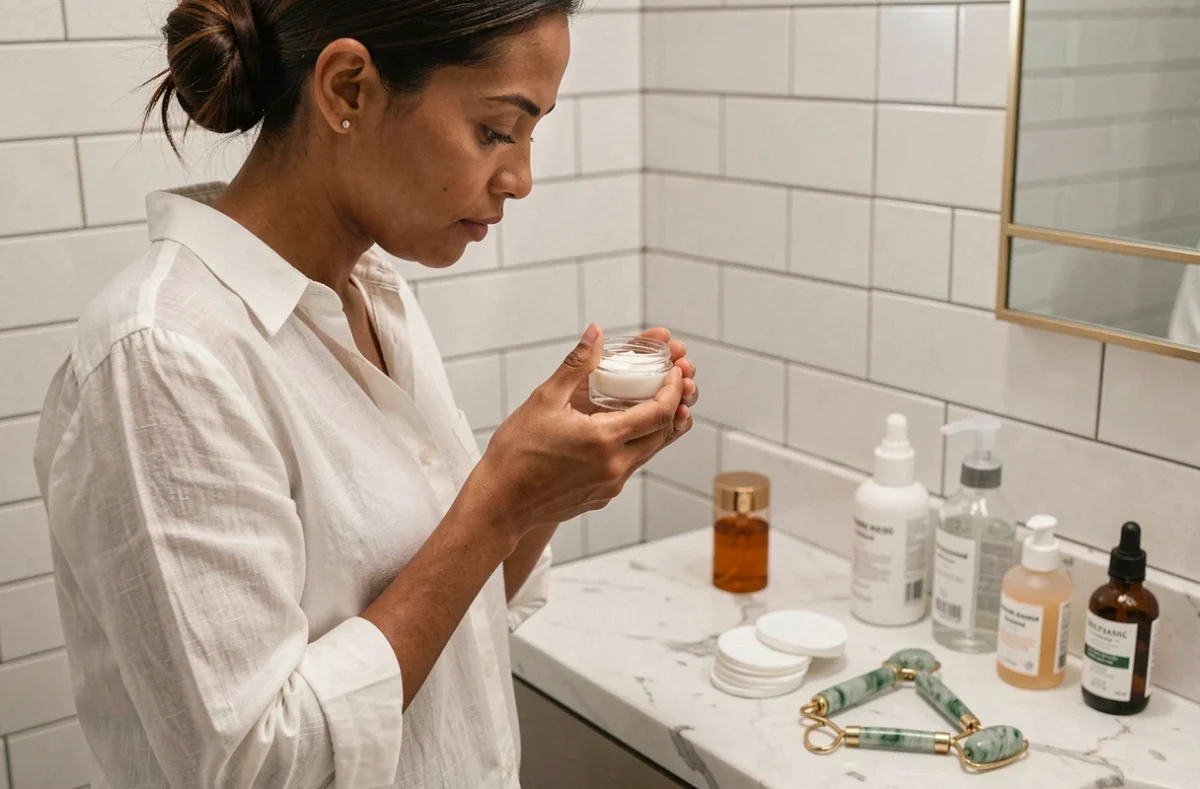
Have you ever applied a cream recommended by a friend and felt a tingling sensation the next day? This kind of mishap is common, and it doesn’t mean the product is bad. It means it isn’t right for your skin. Choosing suitable cosmetics comes down to a few practical guidelines that labels alone can’t provide.
Skin reactions to cosmetics: temporary irritation or a warning sign?
A slight tight feeling after applying a new skincare product may disappear within a few hours. Sometimes, skin needs time to adjust to an ingredient it hasn’t encountered before. However, redness that lasts more than two days, a burning sensation or small, localized blisters are no longer signs of a simple adjustment period.
A persistent reaction may be related to a skin condition such as rosacea, eczema or contact dermatitis, all of which can cause symptoms similar to those of “sensitive skin.” If you’ve already reacted to a product, the priority is to identify the ingredient responsible rather than randomly switching brands.
To identify the ingredient, keep the packaging of the product that caused the reaction. The INCI list, printed on the back, lists ingredients in descending order of concentration. Show it to a pharmacist or dermatologist: this is the most reliable way to compare your medical history with the formula. You can look up several cosmetic products at https://www.kosmetic.fr, making it easier to compare ingredients before buying.
Have you ever noticed that a product labeled “hypoallergenic” still causes itching? The term “hypoallergenic” does not guarantee that a product won’t cause a reaction. It only means the formula was designed to reduce the risk of an allergic reaction, not eliminate it. Naturally derived ingredients, including some fragrance substances, can also cause sensitization.
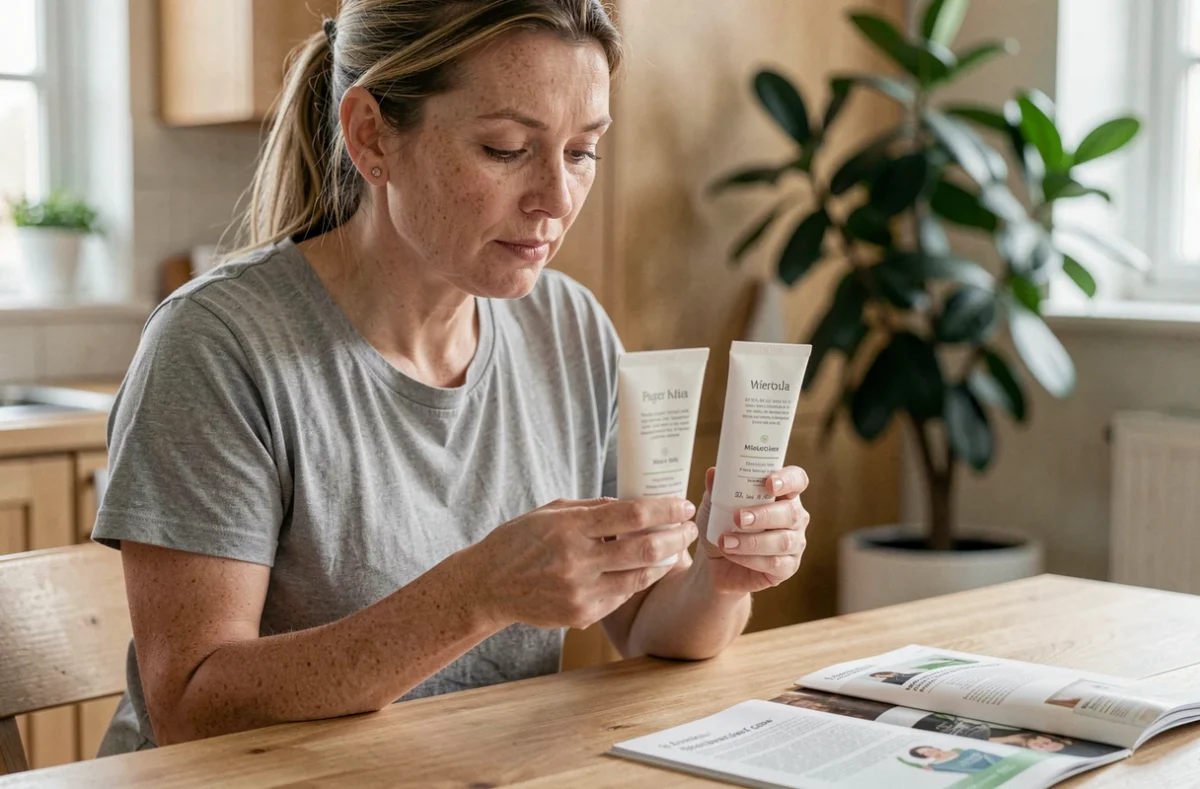
How to read the INCI list and claims on the packaging
Reading a cosmetic label can feel like deciphering a medical prescription. But the INCI list follows a simple rule: the first ingredients are present in the highest concentrations.
The catch is that ingredients present at less than 1% can be listed in any order. In practice, this means an ingredient highlighted on the packaging—such as hyaluronic acid, vitamin C or retinol—may appear near the end of the list at a negligible concentration. Comparing two products this way can help you see which one actually contains a significant amount of the ingredient.
Take environmental claims with a grain of salt
A bottle made from recycled plastic doesn’t make the entire product “sustainable.” European Directive 2024/825 regulates vague environmental claims and sustainability labels that aren’t backed by a certification scheme or public authority. When packaging says “eco-friendly” without specifying what the term applies to—the formula, container or manufacturing process—the claim means only what you choose to read into it.
For everyday choices, focus on what comes into direct contact with your skin: the ingredients and directions for use. Environmental commitments are an additional consideration, not an indicator of how well your skin will tolerate a product.
How to choose cosmetics for your skin type without misdiagnosing it
Before choosing a face or body care product, take an honest look at your skin’s condition. The easiest test is to observe your face in the morning, before applying anything:
- Shiny T-zone (forehead, nose and chin) with comfortable cheeks: combination skin, which calls for a light cream on the T-zone and a richer moisturizer on the cheeks.
- Tightness across the face, especially after cleansing: dry skin, which needs a formula rich in replenishing ingredients (shea butter, plant oils or ceramides).
- Shine across the face and visible pores: oily skin, which tends to tolerate lightweight textures and oil-regulating ingredients such as zinc or niacinamide.
- Frequent redness, sensitivity to cold or reactions to new products: sensitive or reactive skin, best cared for with simple formulas (few ingredients) and no fragrance.
This at-home assessment doesn’t replace professional advice, but it can point you toward the right type of product. An inaccurate diagnosis can lead to an ineffective routine, or even make things worse: applying a rich cream to oily skin can aggravate blemishes.

Storage and directions for use: overlooked factors when choosing cosmetics
A product’s ingredients aren’t the only thing that matters. The period after opening, shown by an open-jar symbol, indicates how many months the product remains stable. Using it beyond this period can cause the active ingredients to break down and increase the risk of bacterial contamination.
Here are a few practical things to check before buying:
- Vitamin C serums oxidize quickly: choose an opaque bottle and a size you can finish within two months.
- Once opened, organic plant oils without preservatives keep better in the refrigerator.
- If a product’s smell, appearance or texture changes unusually, stop using it, even if it hasn’t reached its expiration date.
Storage conditions matter just as much as the formula. A skincare product left in a hot, humid bathroom will deteriorate faster than the same product kept in a dry cupboard.
Build a well-balanced skincare routine
Using more products doesn’t mean getting better results. An effective routine comes down to three steps: cleanse, treat and protect. A cleanser removes impurities, a targeted treatment (serum or cream) delivers ingredients suited to your needs, and sunscreen helps limit everyday damage.
Only add a product to your routine if it addresses a specific need. A dark-spot serum won’t help if your main concern is dehydration. Three well-chosen products are better than a full shelf of products you only use occasionally.
Ultimately, choosing a cosmetic comes down to a simple habit: read the ingredients with your skin’s tolerance in mind, check how to store the product, and be wary of sweeping claims. A product is right for you if your skin tolerates it over time—not because its label makes a big impression.